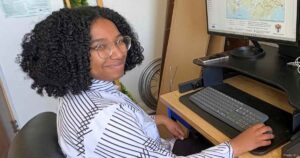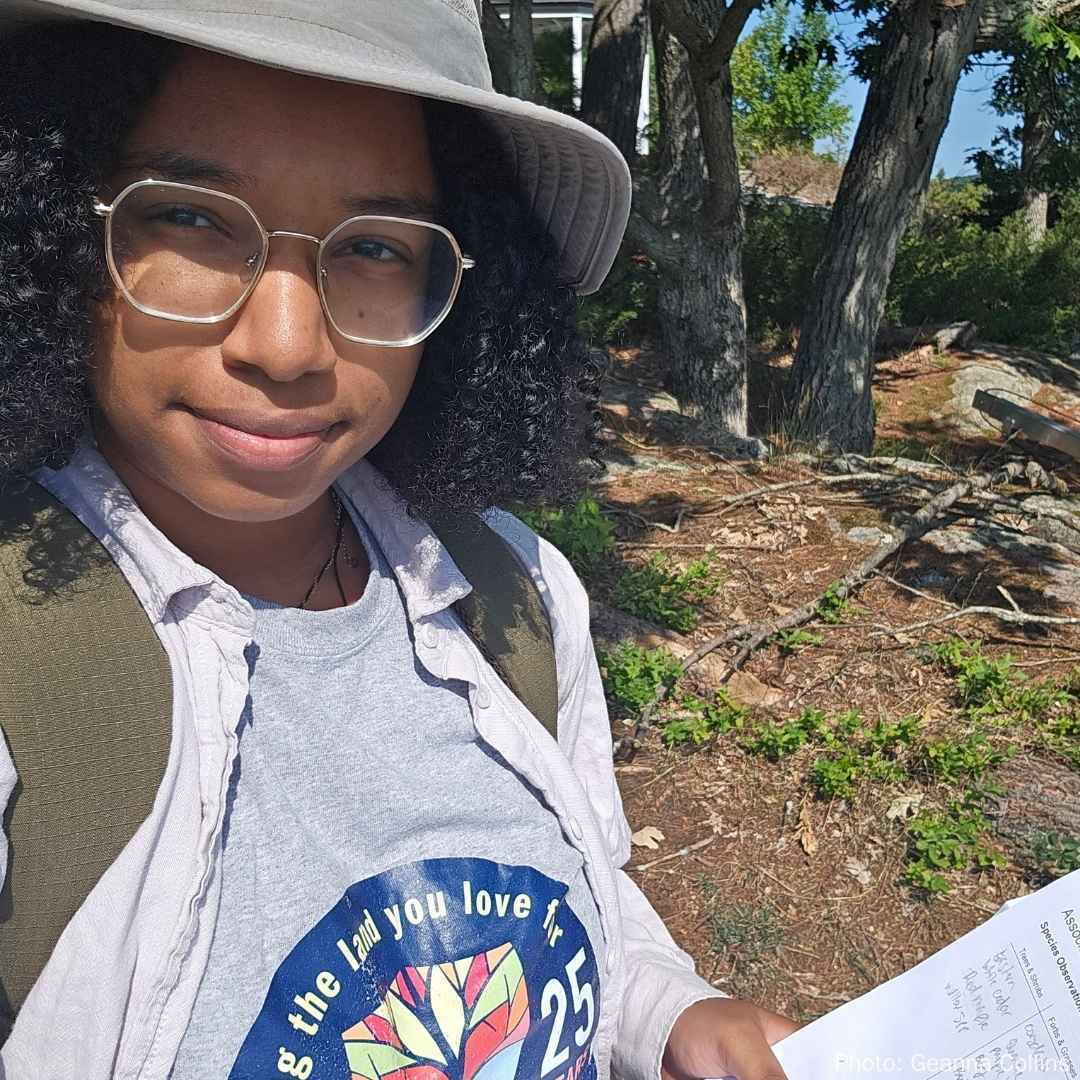
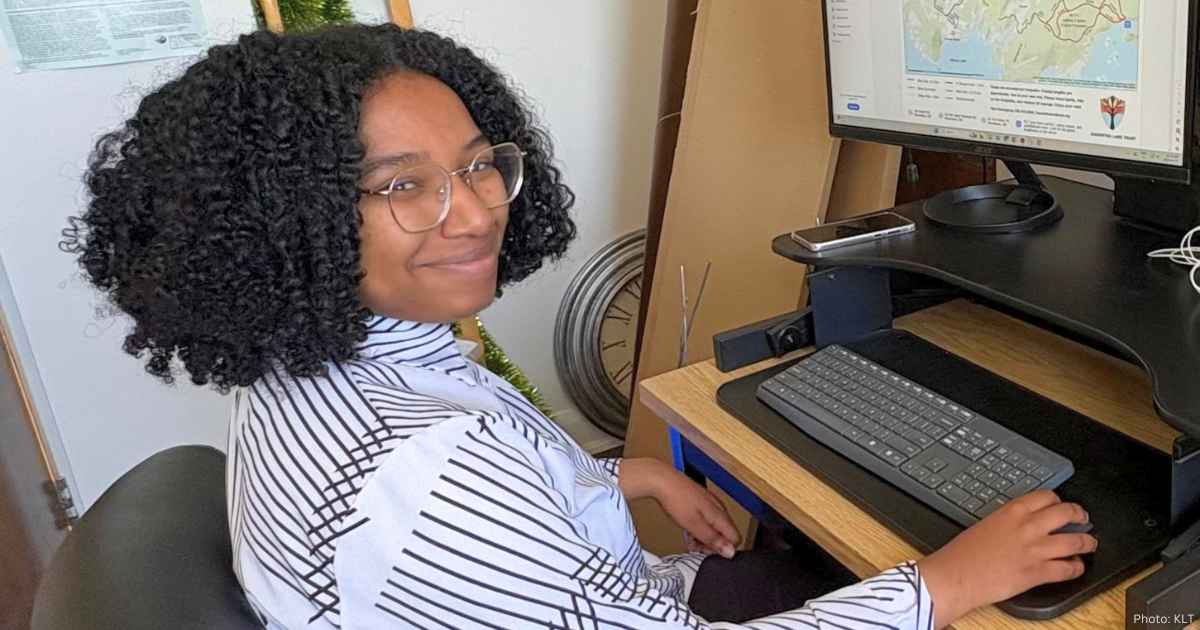
Photo: Geanna Collins at her desk at KLT’s office in The Mount Community Centre in Peterborough. (Ashley MacRae)
By Ashley MacRae, Communications Coordinator
This summer, Geanna Collins worked as Kawartha Land Trust’s (KLT) Conservation Data & GIS Technician. In this role, she used field data, maps and GIS software to create informational guides. These guides support both KLT’s Partners in Conservation program and assisted in the future protection of more natural and working lands in the Kawarthas.
Geographic Information System (GIS) work is complex and can be quite difficult to decipher. But with the ability to decode the data collected in the field, Geanna transformed the GIS information into detailed works that help us and others understand the land in new ways.
Whether it was in the field or office, Geanna was busy this summer supporting vital conservation work in the Kawarthas. You can read more about her experience at KLT and why this work is so important to her.
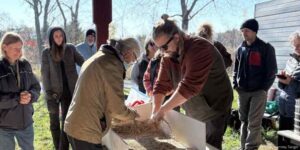
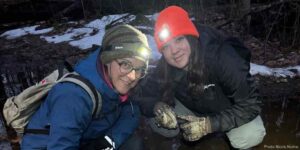
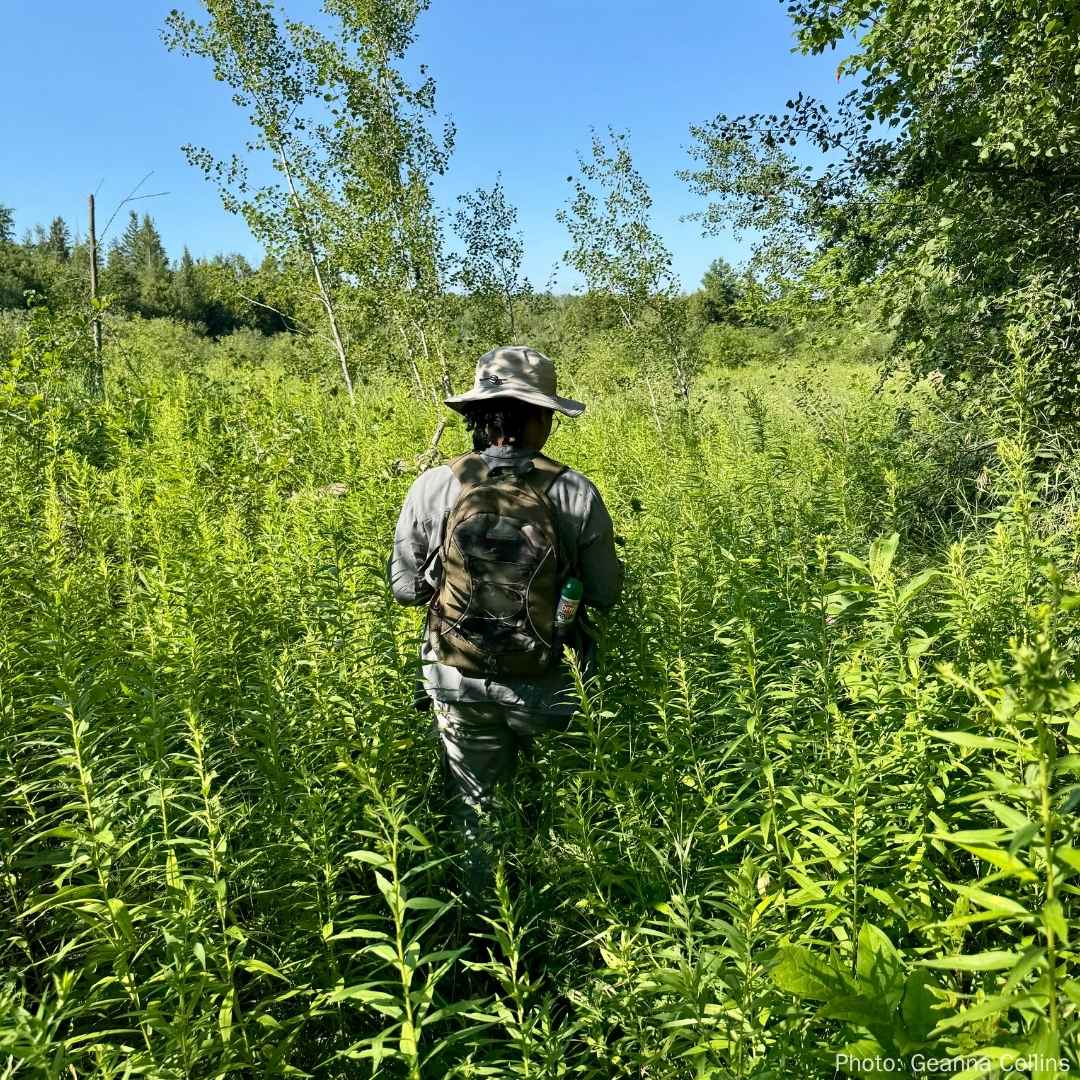
Over the summer at Kawartha Land Trust, I had the opportunity to create booklets for landowners across the Kawarthas and get my feet on the ground with volunteers. Throughout the summer, I also met KLT volunteers at properties KLT is working to protect, and we conducted property inventories together.
To do this, we took notes on the plant and wildlife, habitats, and ecosystems found on the properties, and collected GPS points to identify wildlife and natural features we encountered during the visits. With this data, and through geospatial analysis, I was able to creatively put together maps and create informative booklets called Stewardship Guides.
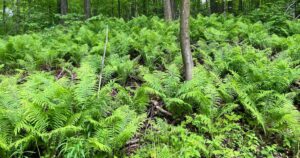
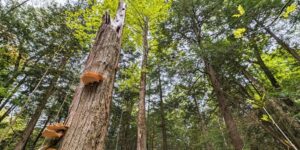
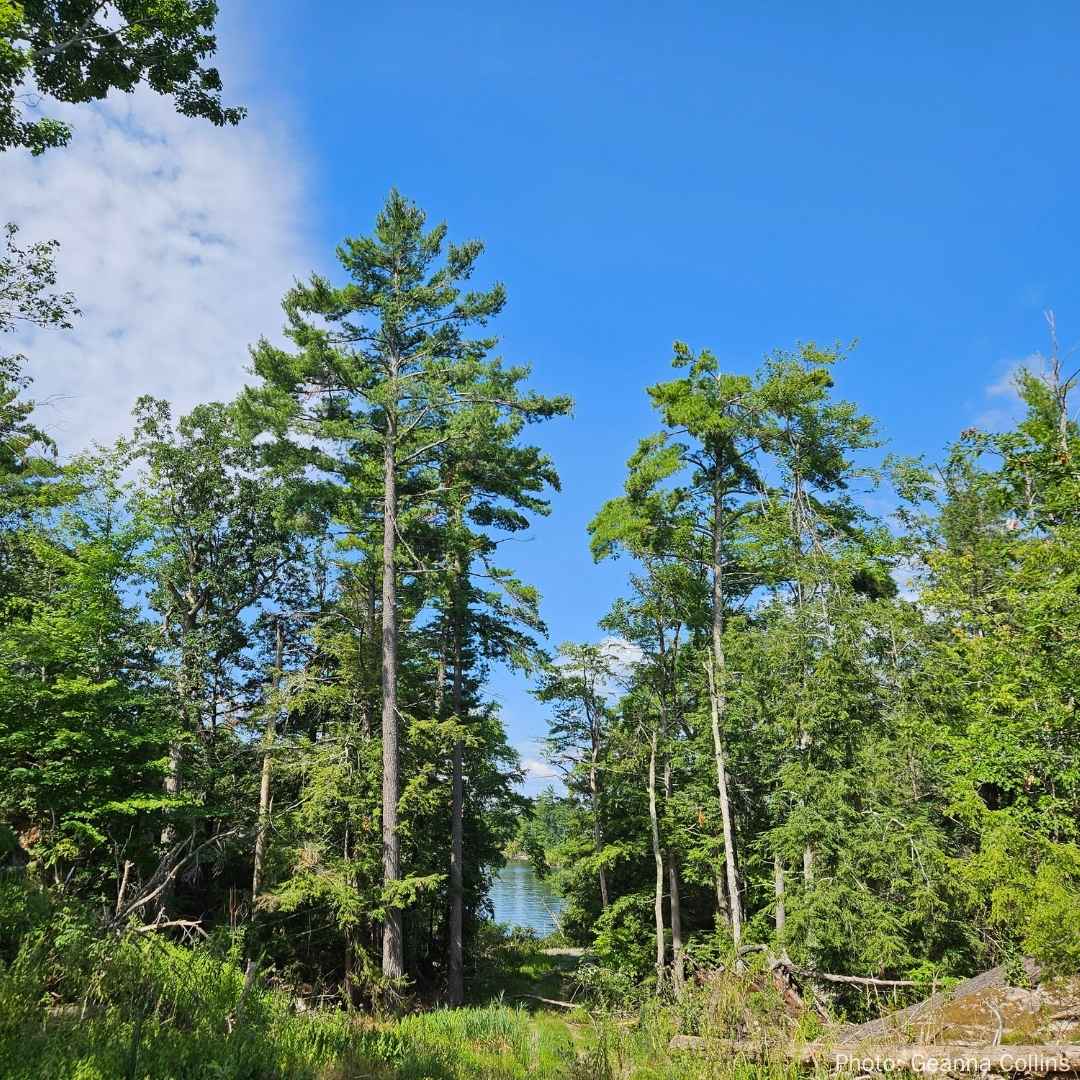
As I did not grow up around the Kawarthas, I enjoyed being able to visit the beautiful wetlands and forests here. Likewise, I also enjoyed meeting volunteers who are just as eager to support conservation efforts in Ontario as I am.
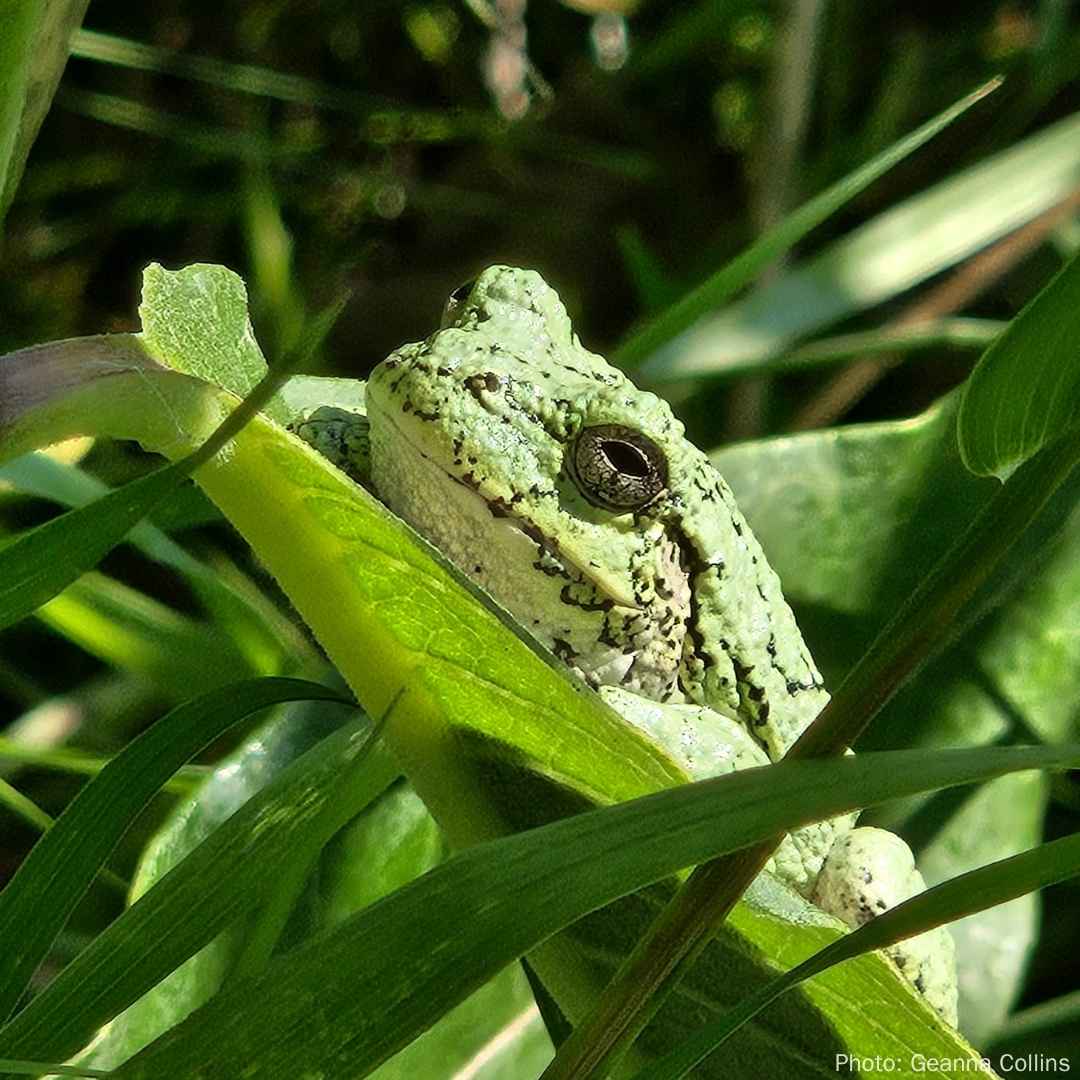
My favourite moment this summer was seeing my first Gray Treefrog laying on a Common Milkweed plant during a property inventory. It was very exciting and memorable as they tend to be quite elusive and usually live in tall trees.
I’ve always had an interest in wildlife, and over time, that interest grew into wanting to learn more about conservation science. Biodiversity loss and habitat fragmentation continue to impact thousands of native species in Ontario, and I believe it’s important to not only conserve the natural spaces that we have left, but to be able to restore them where possible.
It’s especially important for people to find connections to the land and recognize that we are all a part of this interconnect space. Whether through volunteering with a conservation organization, walking community trails, or finding connections in other ways, building an appreciation for these natural spaces is essential to understanding their importance in all cycles of life, including humanity’s.
I believe GIS has become and will continue to develop as an essential tool for conservation work and ecological research. As data becomes more complex, GIS allows us to organize this information and analyze for patterns and relationships we may have overlooked. It also allows us to present information visually to others in the form of maps.
One of my favourite maps I made over the summer includes a landscape conservation value map which shows natural heritage features like Provincially Significant Wetlands (PSW) and Areas of Natural and Scientific Interest (ANSI), adjacent to a property of interest. I think this is a great way to inform landowners of their surrounding landscapes and how their property directly connects to these features.
Following my position with KLT, I will be heading off to Germany in October to start a Masters in Environmental Sciences with a focus in Wildlife & Biodiversity. I look forward to diving deeper into ecological research and I’m excited to see where it takes me.
We’re extremely thankful to Geanna for all of the hard work that she’s completed throughout this field season. Her skills and expertise in GIS data collection and translation were extremely valuable in supporting KLT’s conservation and stewardship work in the Kawarthas. Thank you, Geanna!
Geanna’s position was supported with funding received from the Government of Canada’s Canada Summer Jobs Program and Ampere’s GreenWorks program, which is funded in part by the Department of Natural Resources Canada.
We extend our thanks for their support in protecting the land we love in the Kawarthas.