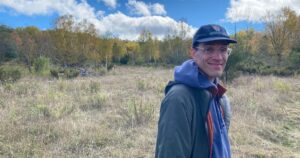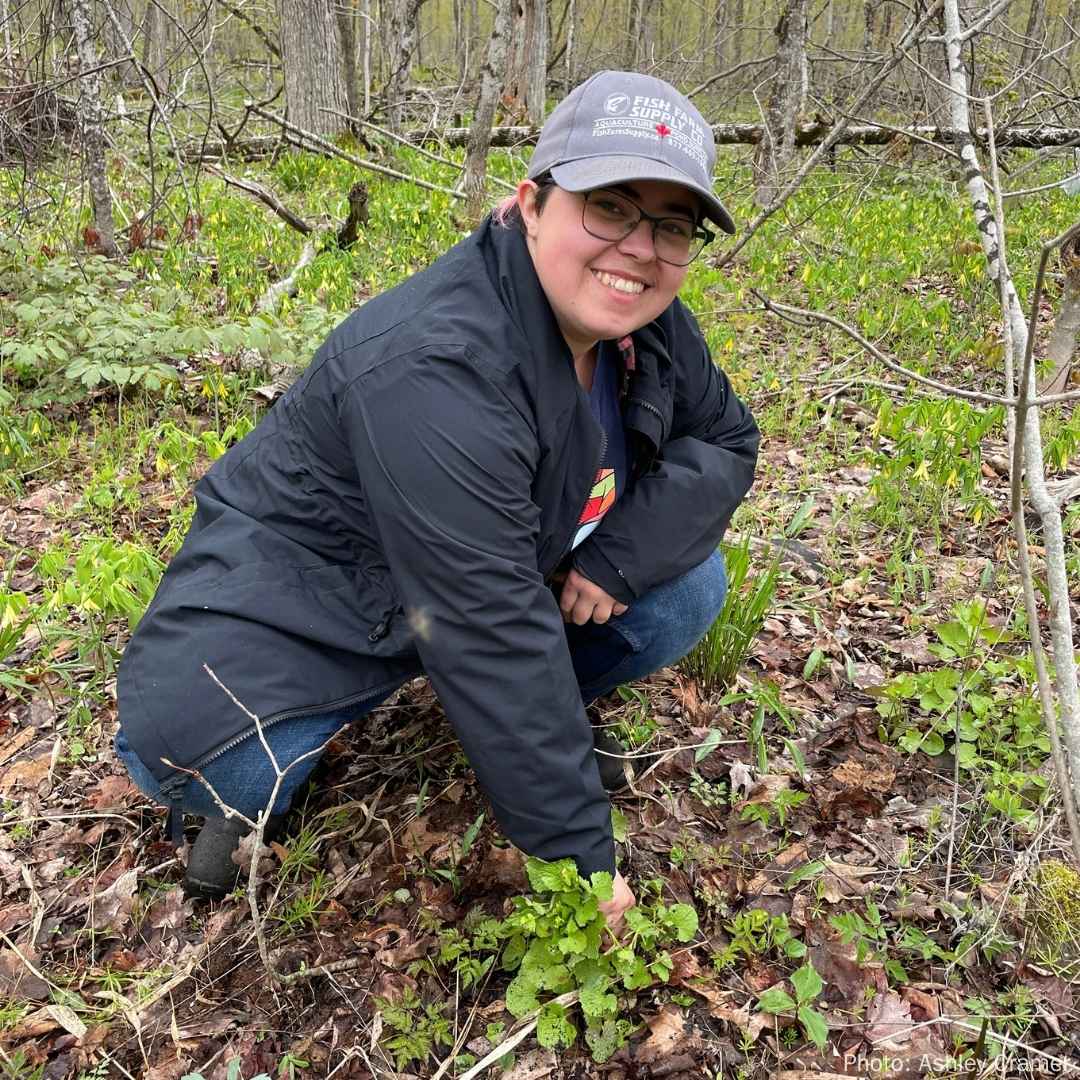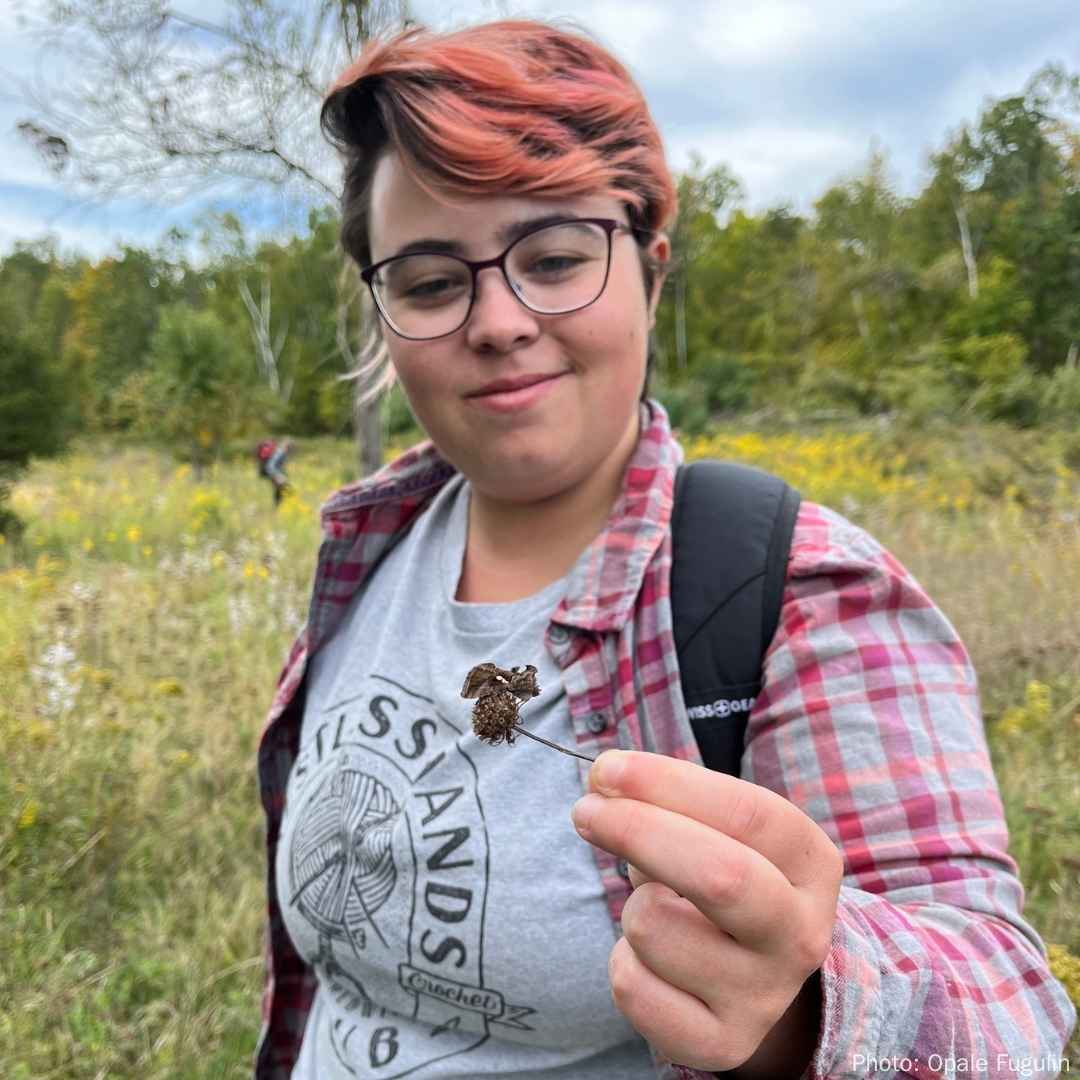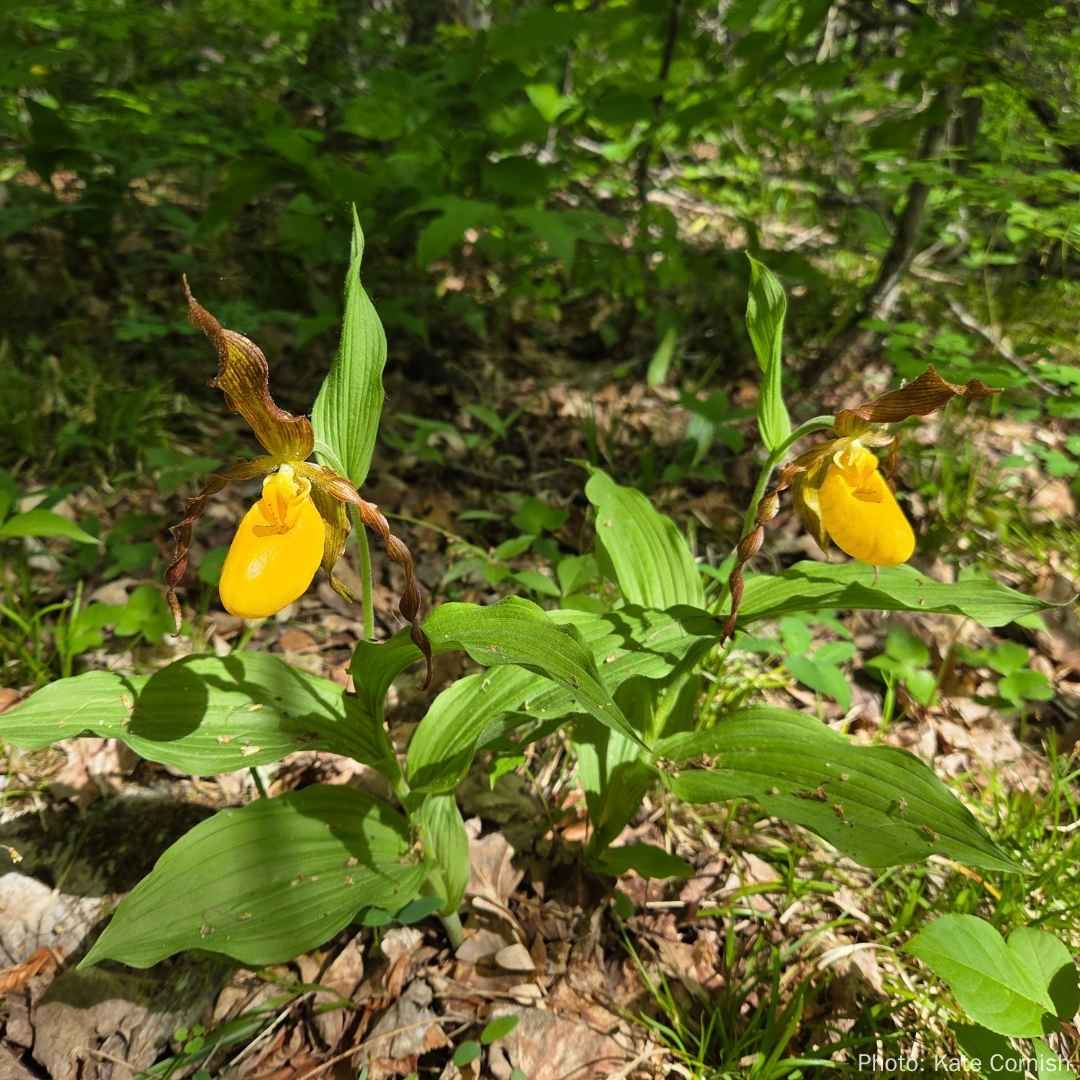
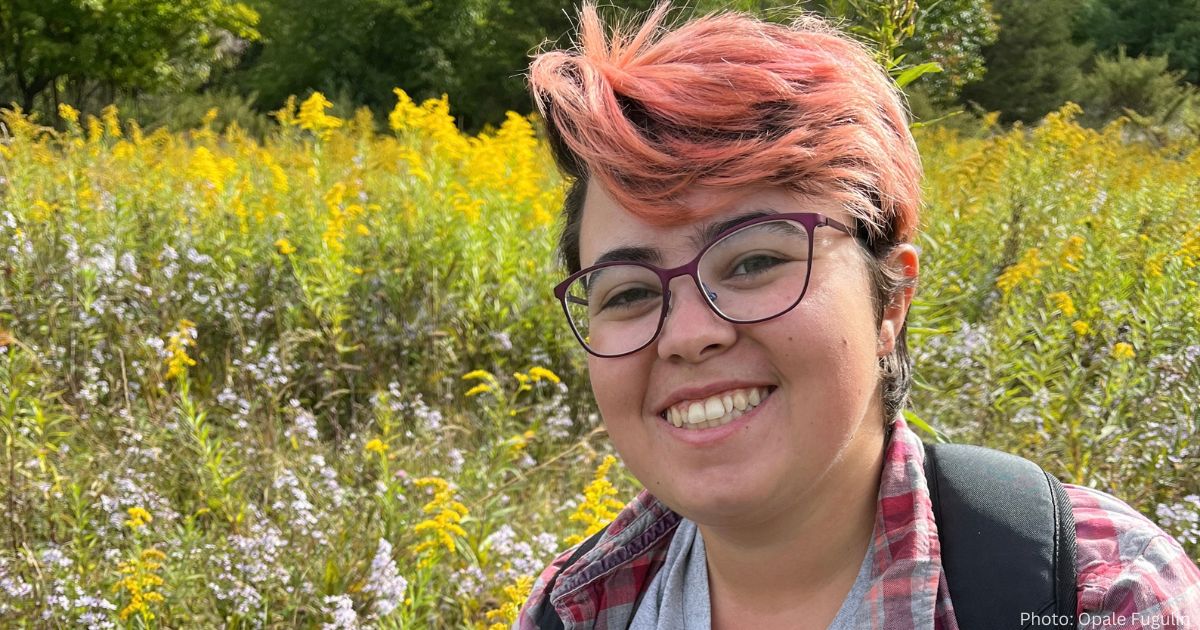
Photo: Kate Cornish collecting native plant seeds on KLT’s Big (Boyd/Chiminis) Island. (Opale Fugulin)
By Ashley MacRae, Communications Coordinator
Supporting a globally rare ecosystem and maintaining community trails were just some of the ways student Kate Cornish spent the past field season with Kawartha Land Trust.
Thanks to your generous support and vital funding from the Canada Summer Jobs program, Trent University student Kate Cornish was Kawartha Land Trust’s (KLT) Conservation and Restoration Technician this past summer — making a difference for nature from Pontypool to Coboconk.
During her time with KLT, Kate supported a rare ecosystem through various stewardship projects, monitored protected properties, collected native seeds, and cared for community trails.
“Working with someone who genuinely loves being outdoors and is passionate about our local ecology makes for a great summer,” shares Ashley Cramer, Land Stewardship Coordinator.
“Kate’s enthusiasm for nature, willingness to get her hands dirty, and passion for restoration work brought a positive energy to the team every day.”
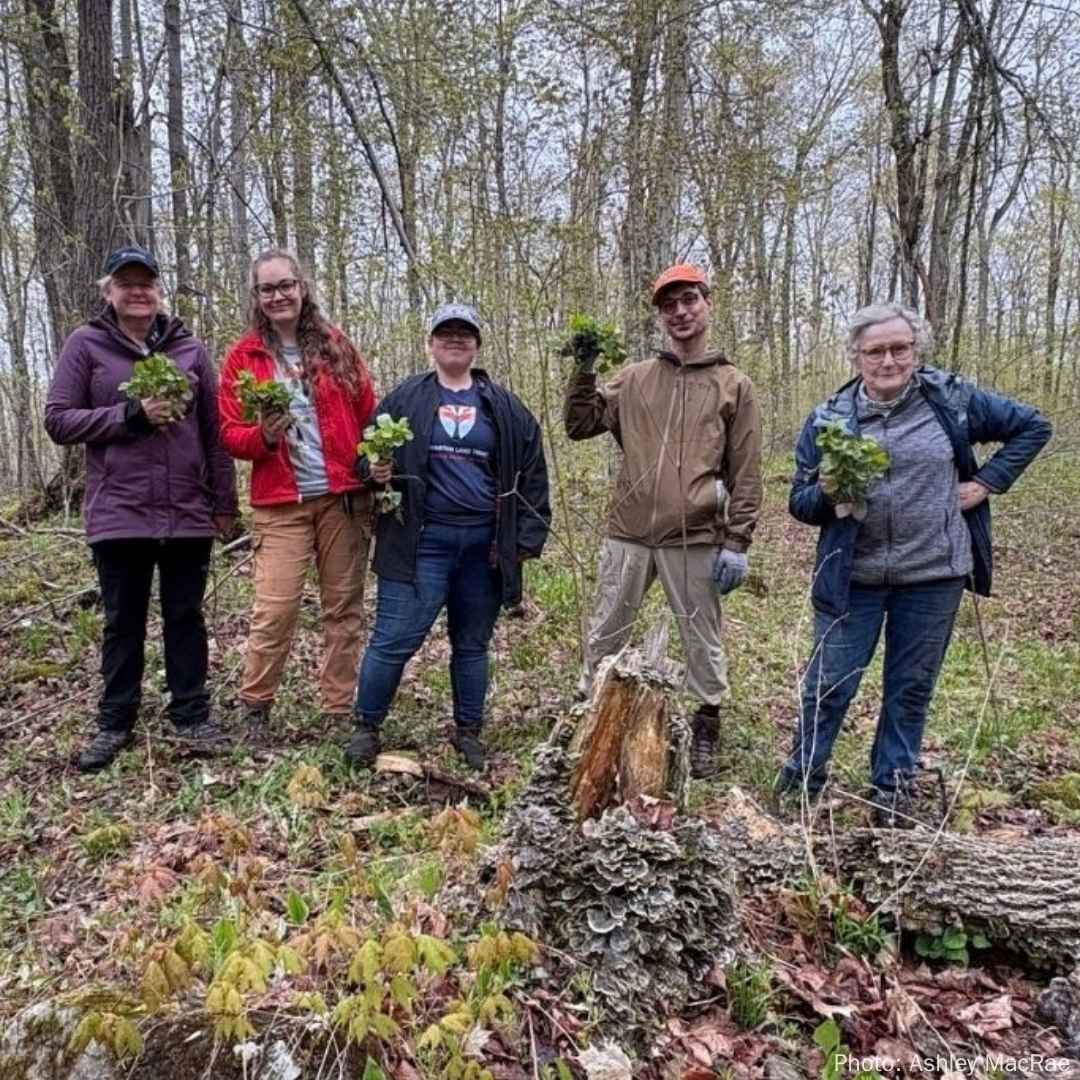
Kate enjoyed her time on the land while making a difference for nature and the community — from invasive species management and restoration projects that support biodiversity to supporting community connection to nature through trail maintenance.
You can read more about her experiences this past field season below.
I was so excited to join Kawartha Land Trust (KLT) this summer as a Conservation and Restoration Technician and have the opportunity to help care for our local ecosystems.
My tasks were split between the maintenance and monitoring of KLT’s protected properties and supporting Land Restoration Coordinator, Mitchell Walker, with KLT’s ongoing tallgrass prairie restoration projects at Ballyduff Trails.
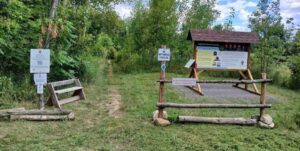
Working with KLT sent me across many of KLT’s properties as I trimmed back foliage along community trails, pruned trees, and fixed signs, which gave me the opportunity to get to know the larger KLT community. Be it our generous volunteers, visitors who frequent the trails, or wildlife, it was wonderful to get a chance to see the benefit these spaces bring to those around them.
My favourite moment of the summer tests the definition of a moment because it happened gradually over the season. One of my primary jobs was working on projects related to the care of the tallgrass prairie at KLT’s Ballyduff Trails — managing invasive plants, including the removal of Scots pines, and monitoring for species at risk.
Spending a lot of time at Ballyduff Trails allowed me to see how the prairie changes over time as new plants bloom and new insects reach their peak season. Alongside this rapid and visually stunning change, I also got to see the slow but undeniable changes brought about by our restoration efforts.
Working in conservation, you don’t often get to see how your work impacts the environment, so getting the opportunity to watch sections of Ballyduff Trails’ tallgrass prairie transform with the extensive removal of invasive Dog Strangling Vine and other invasive plant species brought me more joy than I can express.
All of this is why conserving natural and working lands is important to me. Not only is KLT working to preserve rare and unique ecosystems, but it shares these spaces with the community that loves them through community trails, events in nature, and volunteer opportunities — strengthening their love of and connections to the land.
It’s a privilege to know that I played a role in fostering that love and connection to nature.
We extend our sincerest thanks to Kate for her work to support nature in the Kawarthas this past field season. Kate plans to continue to volunteer with KLT as she finishes her Honours Bachelor of Science in Ecological Restoration at Trent University. Thank you, Kate, and best of luck with your studies!
Kate’s position was supported by funding received from the Government of Canada’s Canada Summer Jobs (CSJ) Program. CSJ is a program under the Youth Employment and Skills Strategy (YESS). It helps youth aged 15 to 30 gain paid summer work experience and develop skills for the job market.