By Morgan McColl, Communications Assistant
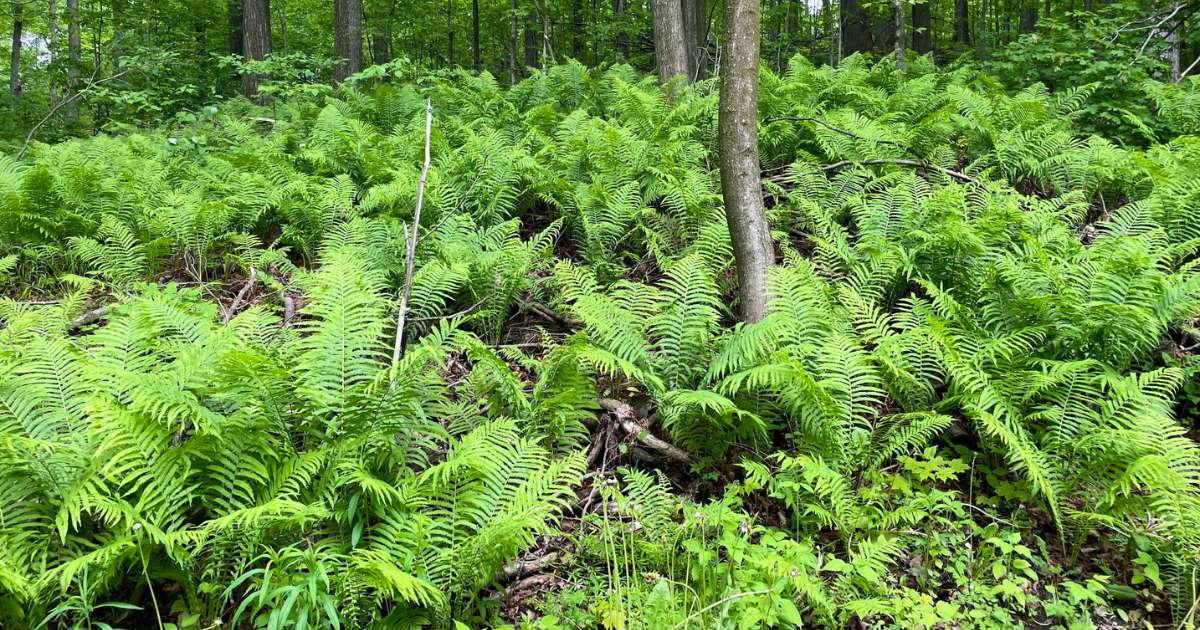
During a walk through the forests of the Kawarthas, you will likely notice lush, feathery plants on the forest floor, clustered along trails or growing beside wetlands. Ferns are sometimes easy to overlook, but they are among the most fascinating plants in our region, both for their beauty and their evolutionary history.
Long before flowering plants were present, ferns were already thriving. Fossil evidence suggests that ferns first evolved roughly 400 million years ago — 200 million years before dinosaurs roamed the land. While the world around them has changed dramatically over time, ferns have persisted, adapting to shifting climates while retaining many defining traits.
What Makes a Fern a Fern
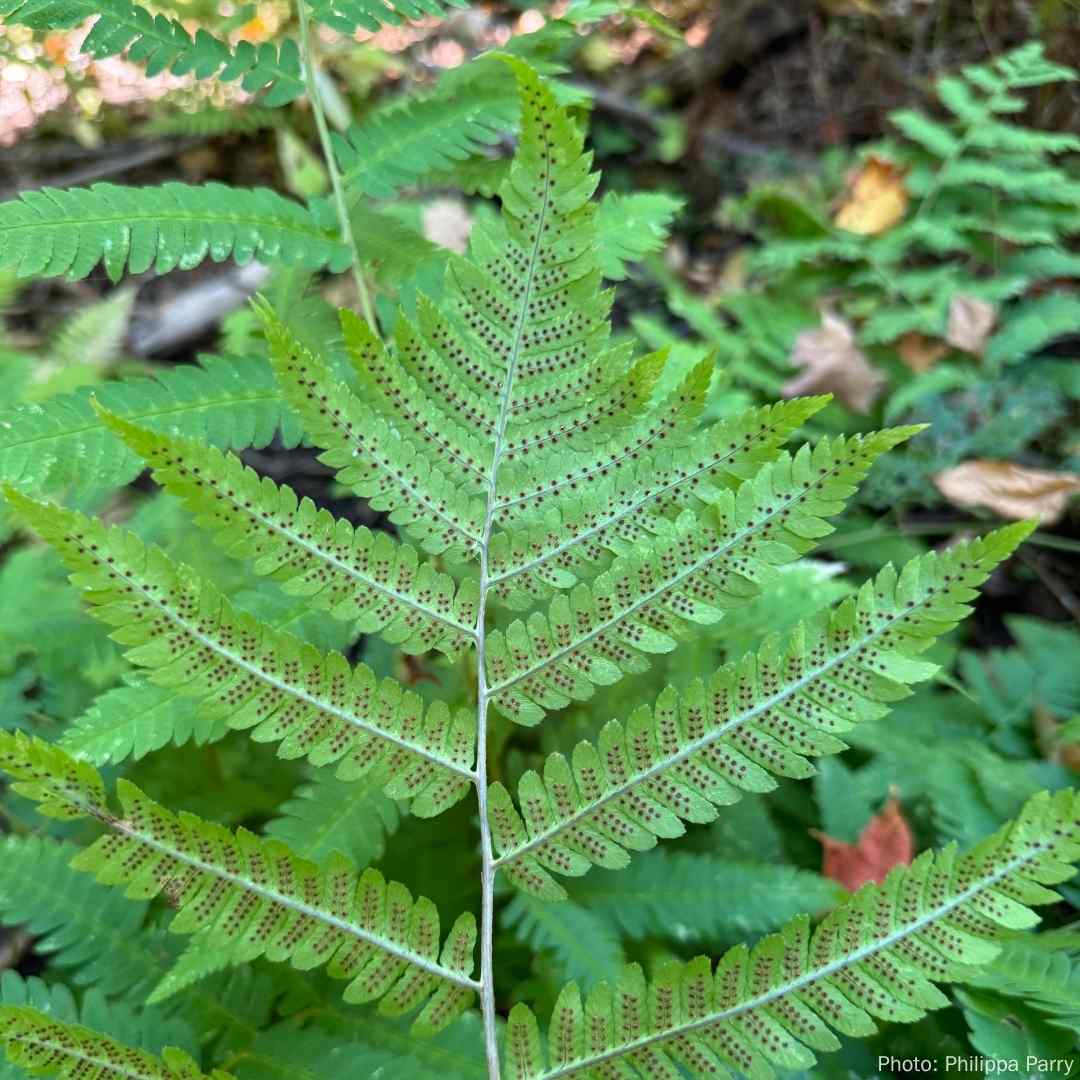
Unlike most plants, ferns do not produce flowers, fruits, or seeds. Instead, most ferns reproduce using spores — tiny structures often found in clusters (sori) on the underside of their leaves. Spores are also how fungi and many mosses reproduce. Some ferns form colonies by cloning themselves through underground stems called rhizomes.
While still being a plant, different terminology is used to describe the anatomy of a fern. The frond is the entire part of the fern we see above ground. Beneath the frond, there are roots, which spread vertically, and rhizomes that spread horizontally and help the fern spread. Each section of the leaflike part is called the pinna, and, within each pinna, there are pinnules.
Many ferns emerge as tightly coiled fiddleheads in the spring, slowly unfurling in a process called circinate vernation, or leafing.
Ferns also come in a wide range of sizes. Some are tiny and easy to miss (like Rock Polypody which typically grows 15-30 cm tall), while others can grow several feet tall (such as Goldie’s Wood Fern). While Ontario doesn’t have the towering tree ferns found in tropical regions, the Kawarthas still host some impressively large species like the Ostrich Fern, Cinnamon Fern, or Bracken Fern.
Ecology of Ferns
The Kawarthas sit at a unique ecological crossroads known as “The Land Between,” a transition zone between the ancient granite of the Canadian Shield to the north and the limestone-based Great Lakes and St. Lawrence Lowlands to the south. This meeting of two geological regions creates a mosaic of habitats, from rocky uplands with thin soils to rich deciduous forests and extensive wetlands.
In forest ecosystems, ferns help stabilize soil, retain moisture, and reduce erosion, especially on slopes or in areas with thin soils over bedrock, which are common in the northern Kawarthas. They also contribute to the layered structure of forests, filling in the understory beneath trees and shrubs.
In wetlands and along shorelines, ferns help maintain humidity and provide habitat for insects and small organisms. These areas are particularly important in the Kawarthas, where interconnected lakes, rivers, and wetlands form a defining feature of the landscape.
For ferns, the diversity of conditions we have in the Kawarthas is key to maintaining species diversity. Many species thrive in moist, shaded environments, which are abundant here thanks to:
- Dense forest canopies dominated historically by Maple, Beech, and Oak
- Moist soils in low-lying areas and along waterways
- Wetlands, shorelines, and seepage areas that retain humidity
Let’s learn a little more about some common ferns in the area so that you might grow more “frond” of them.
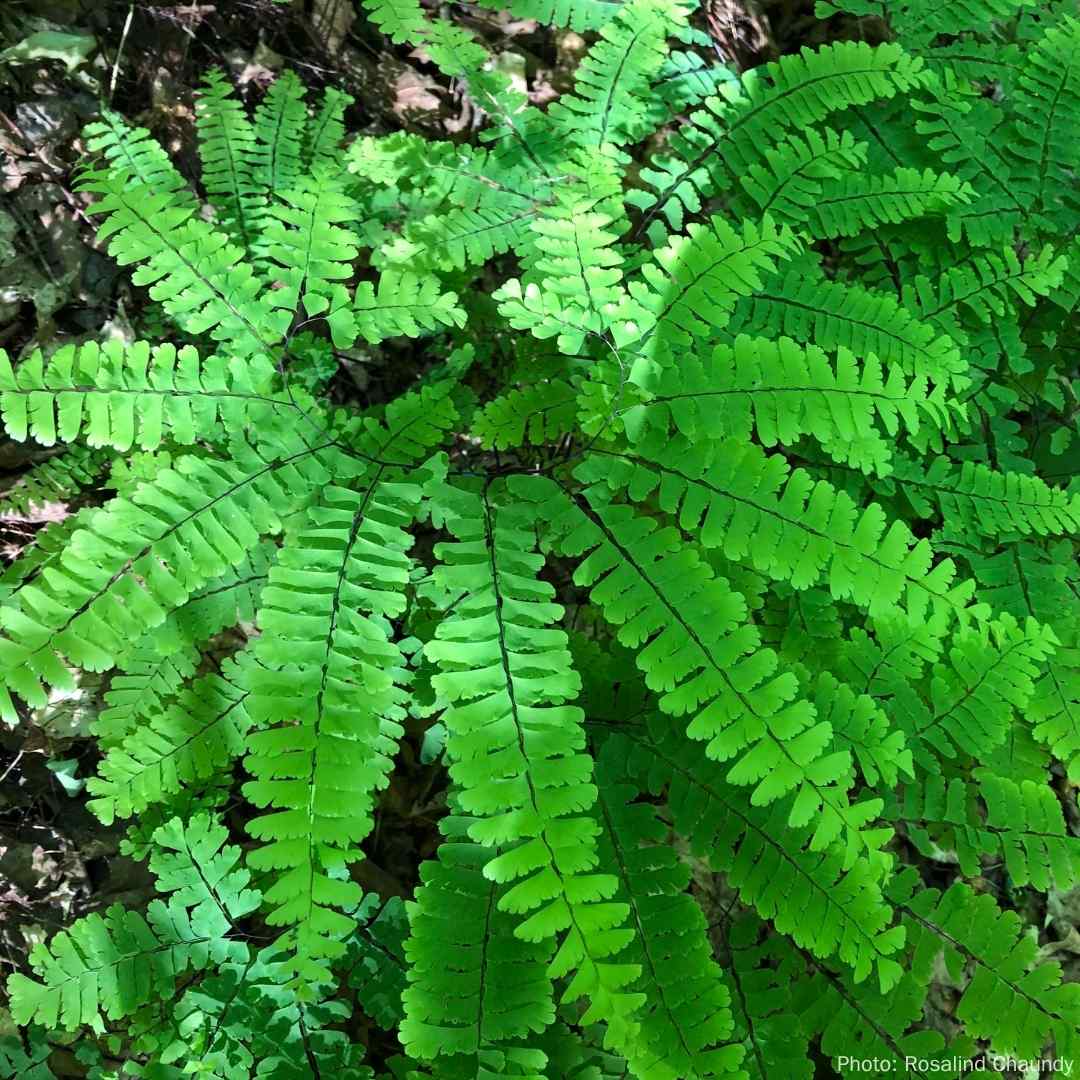
Maidenhair Fern
One of the most distinctive and recognizable ferns in the region, Maidenhair Fern has delicate, fan-shaped leaflets arranged in a circular pattern along thin, black stems. It typically grows in rich, moist deciduous forests, often in shaded areas with calcium-rich soils. Despite its delicate appearance, it can form large, healthy patches under the right conditions.
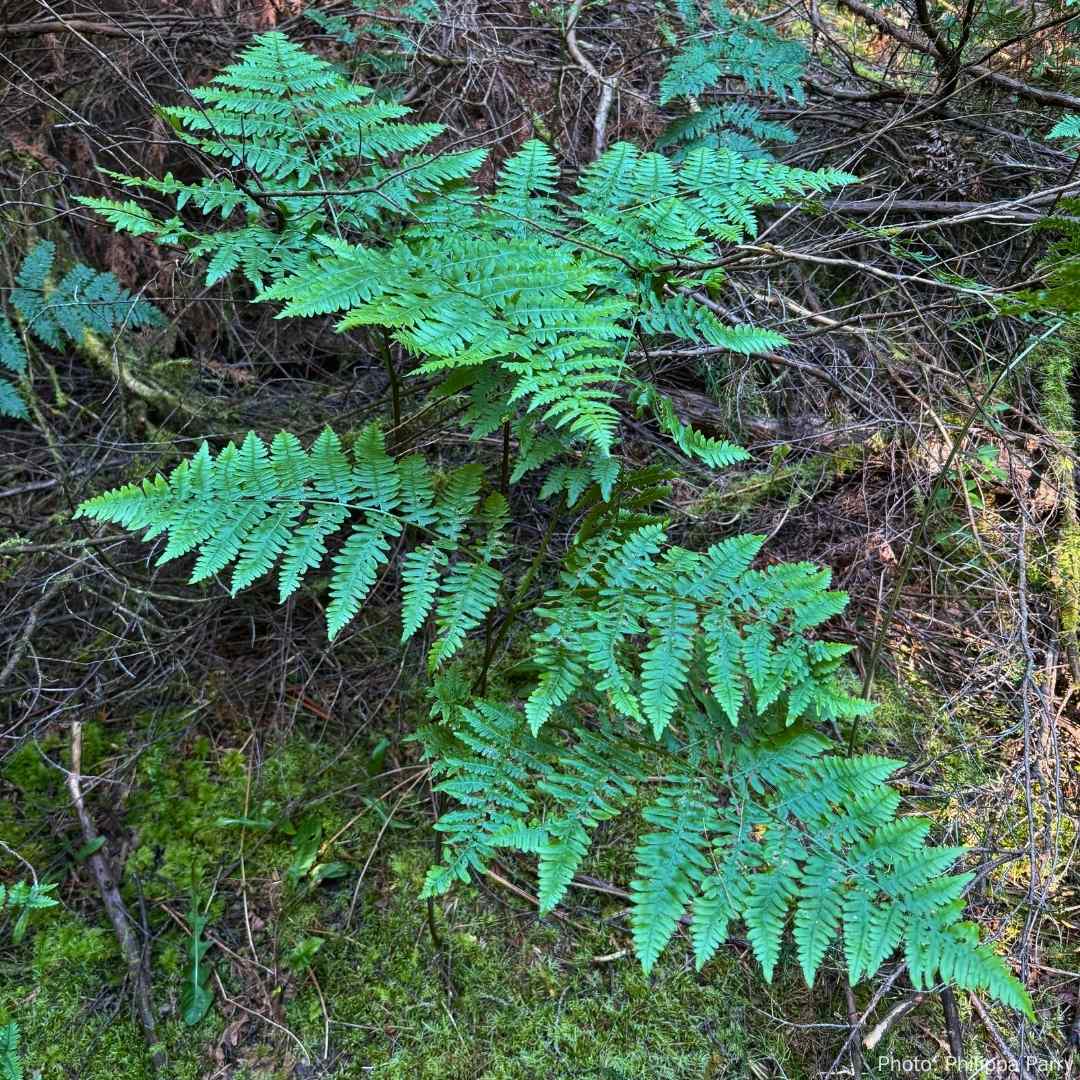
Bracken Fern
A highly adaptable species, Bracken Fern thrives in open woods, disturbed areas, and even dry soils. It often forms large colonies and is one of the most widespread ferns globally. This species has been around for approximately 55 million years.
Rock Polypody
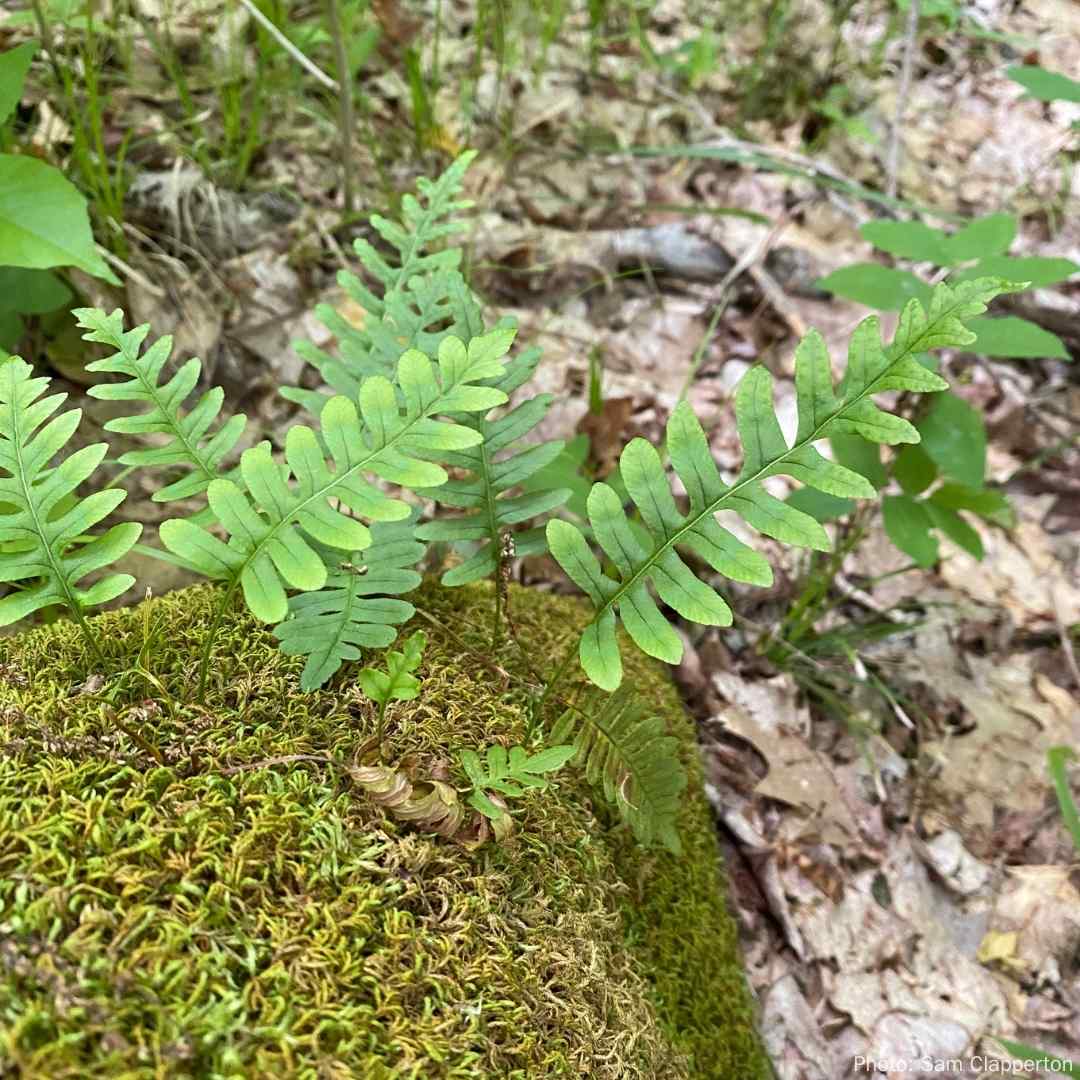
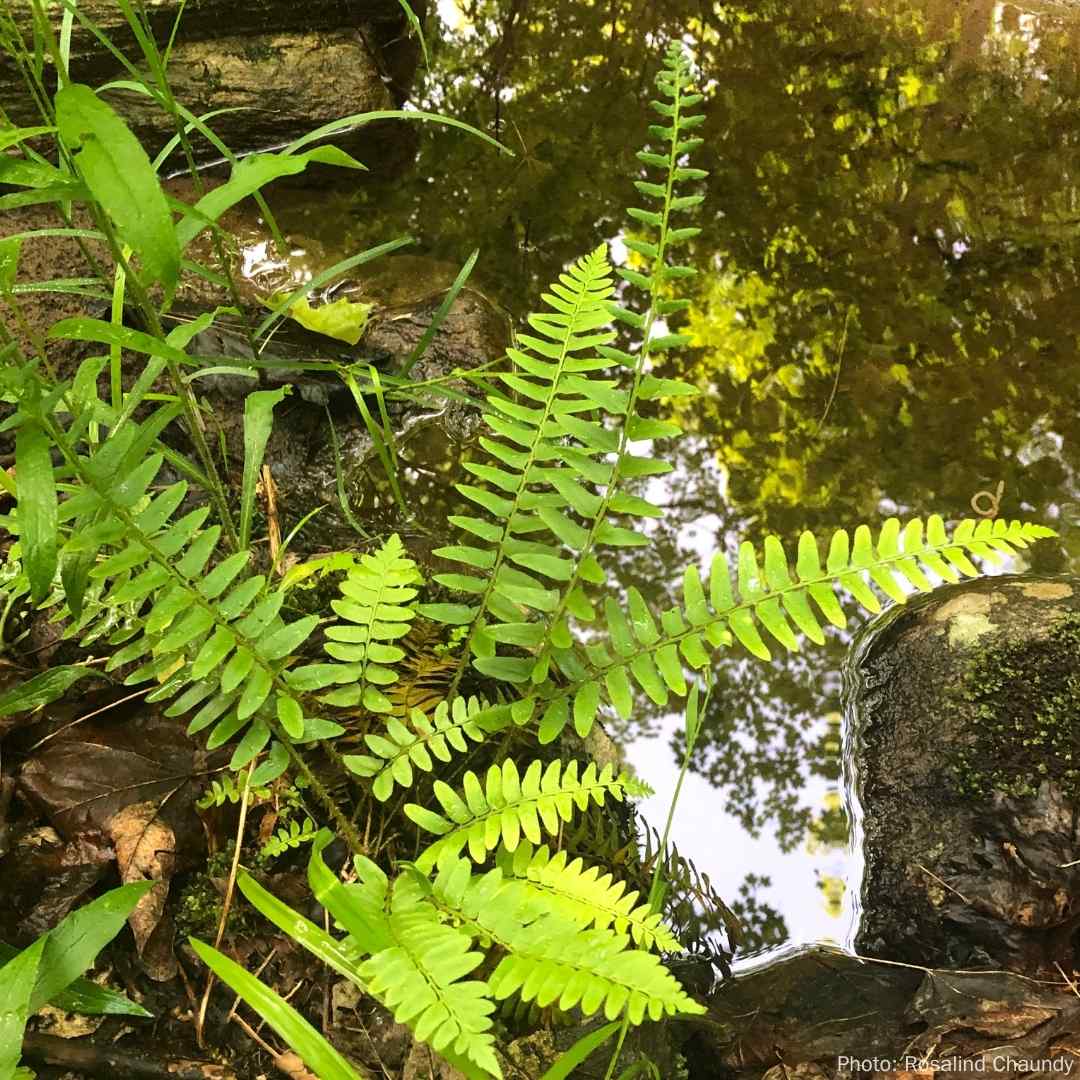
This smaller fern is often found growing directly on exposed rock surfaces, especially in mossy, shaded areas. It spreads by creeping rhizomes, forming low mats rather than upright clusters. These ferns are often found alongside cedar trees. Rock Polypody is well-adapted to the thin soils and dry conditions found on rocky outcrops, making it a good example of how ferns have adapted to the varied terrain of the Kawarthas.
Cinnamon Fern
A fern that has likely been around since before the dinosaurs, this is one of the oldest fern species that has remained virtually unchanged for the last 73 million years.
Sensitive Fern
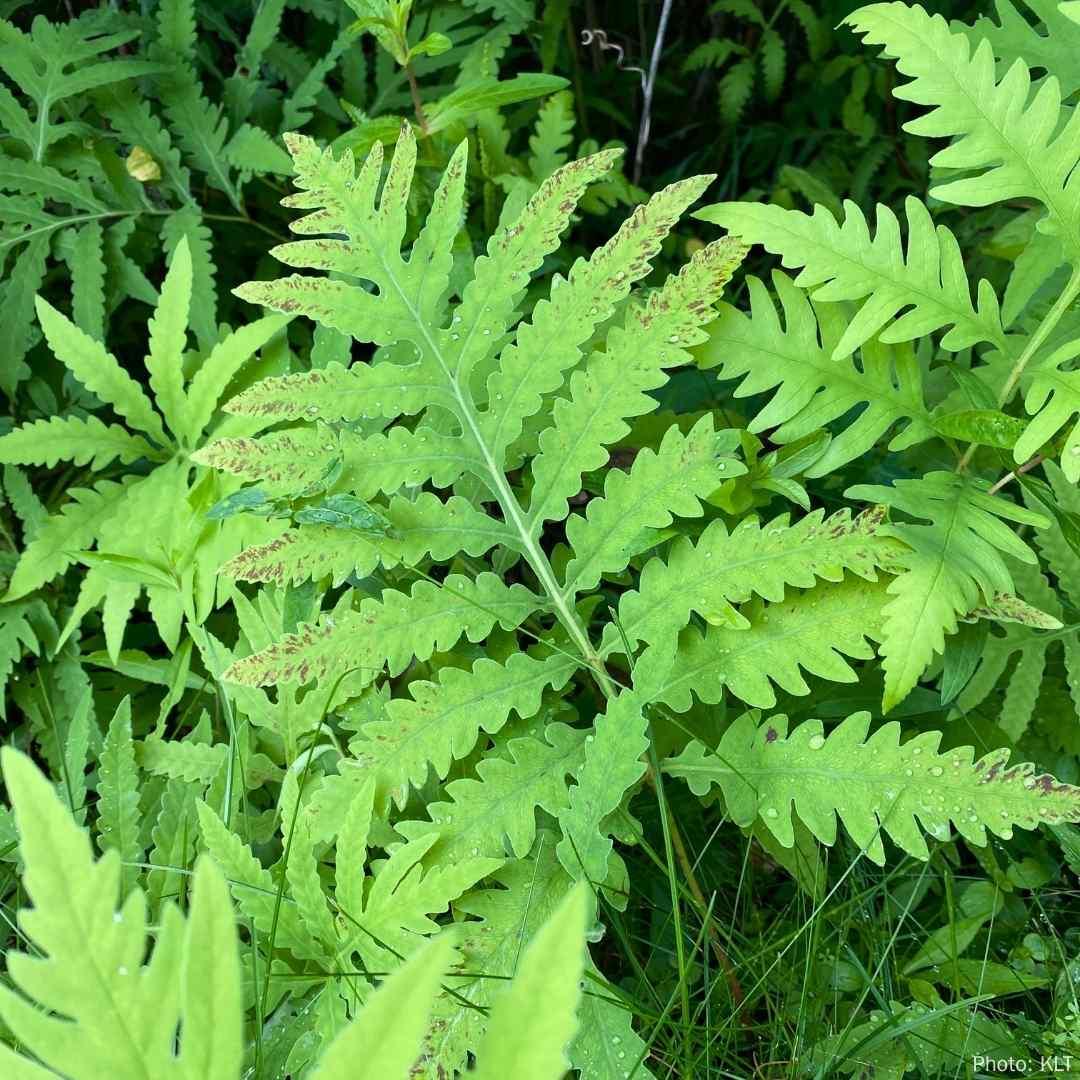
This fern gets its name from its intolerance to frost. Its fronds die back quickly after the first cold snap in fall. It grows in moist to wet environments like marshes, swamps, and along shorelines, often forming dense colonies. Its broad, somewhat coarse fronds look quite different from the finer textures of many other ferns, making it relatively easy to identify.
Royal Fern
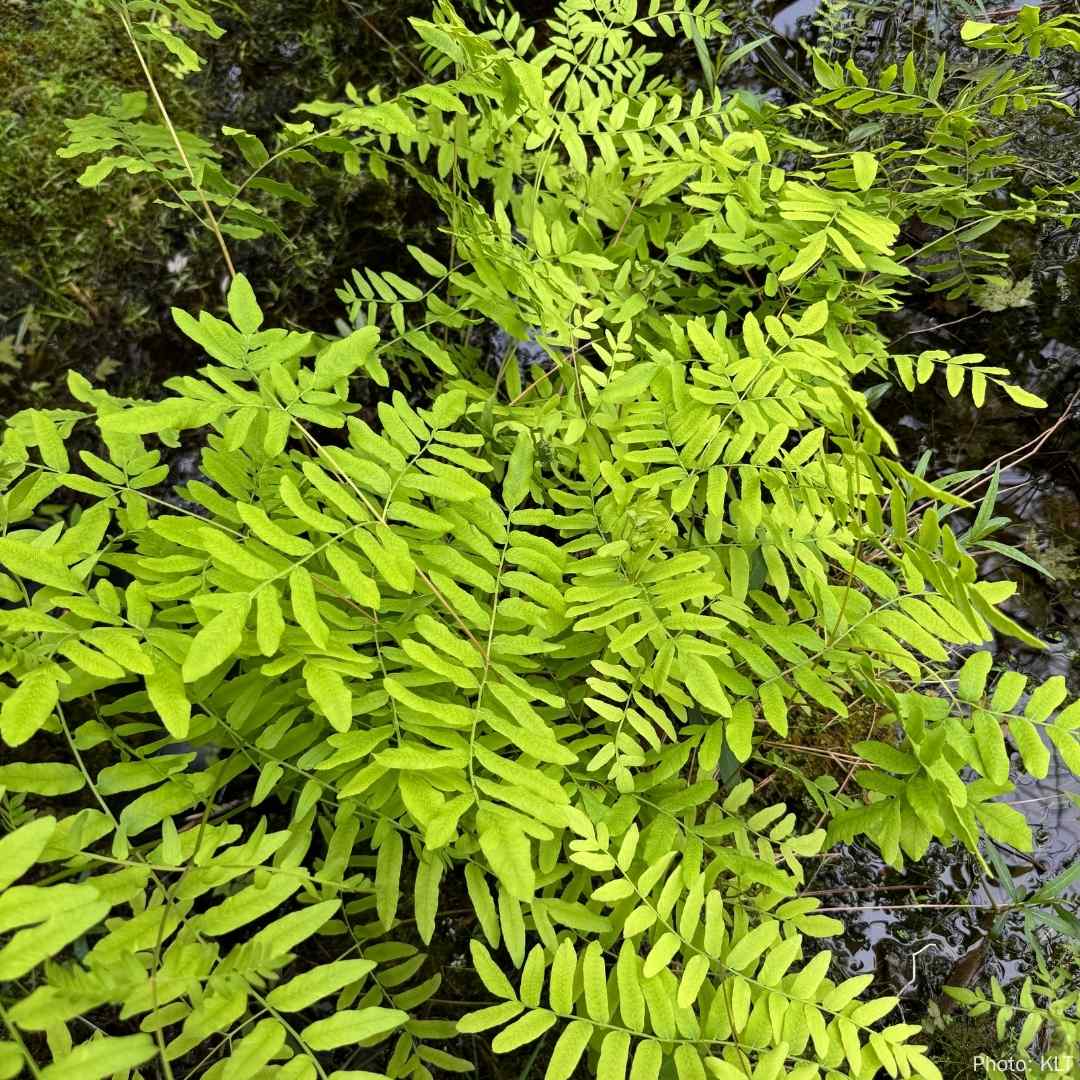
This species tends to grow in wetlands and along slow-moving water. It has a more upright, structured form than most ferns, and its spore-producing fronds form distinctive clusters that stand out from the rest of the plant.
Goldie’s Wood Fern
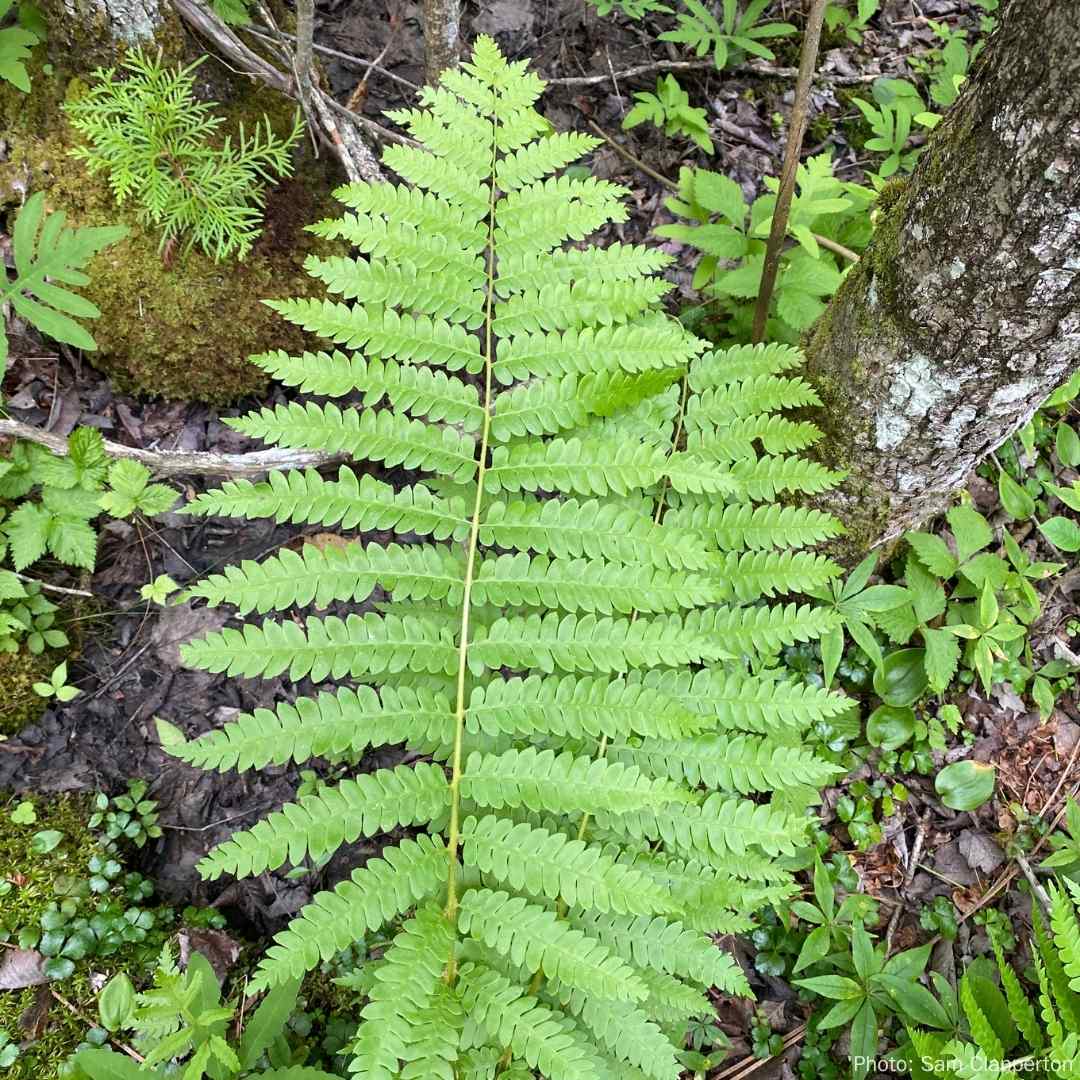
One of the largest ferns in the area, this species can reach 3–4 feet tall. It’s usually found in mature deciduous forests with rich, moist soil. Its broad fronds give it a full, almost oversized look compared to other woodland ferns.
Christmas Fern
An evergreen fern that stays green through winter, the Christmas Fern is a common sight in Ontario forests, especially on slopes and in well-drained soils. Its leathery, dark green fronds grow in clumps and most lie flat against the ground by late fall.
The name comes from its ability to remain vibrant through the holiday season. It’s also relatively tolerant of drier conditions compared to many other ferns, which helps it thrive in mixed hardwood forests.
Fern Relative
Field Horsetail
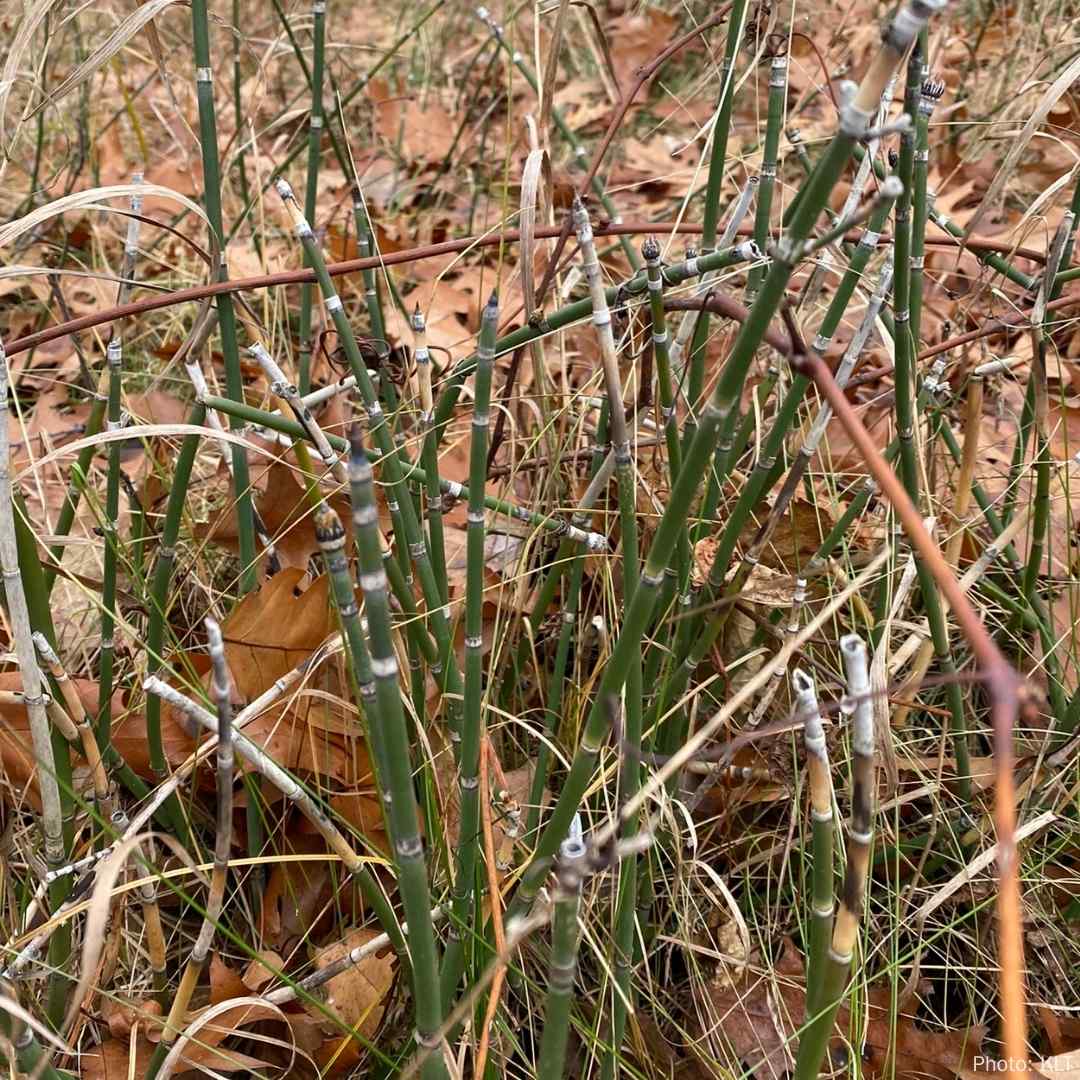
Often grouped in with ferns, horsetails are actually an ancient, fern-allied plant lineage that dates back to the same prehistoric era. Field horsetail is common in the Kawarthas, especially in sandy soils, roadsides, and disturbed areas.
It has a very different look from ferns. Its green stems are segmented and hollow, with whorled branches that give it a brush-like or “mini pine tree” appearance. In early spring, it sends up separate, tan-coloured fertile stems that release spores before the green shoots appear. Horsetail is well adapted to tough conditions and can spread quickly through underground rhizomes.
The next time you’re out in nature, we hope you’ll keep your eyes out for these ancient beauties.
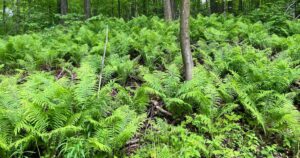
Main photo: Photo: Ferns on the forest floor at KLT’s Maitman-Sutton CEA. (Ashley Cramer)