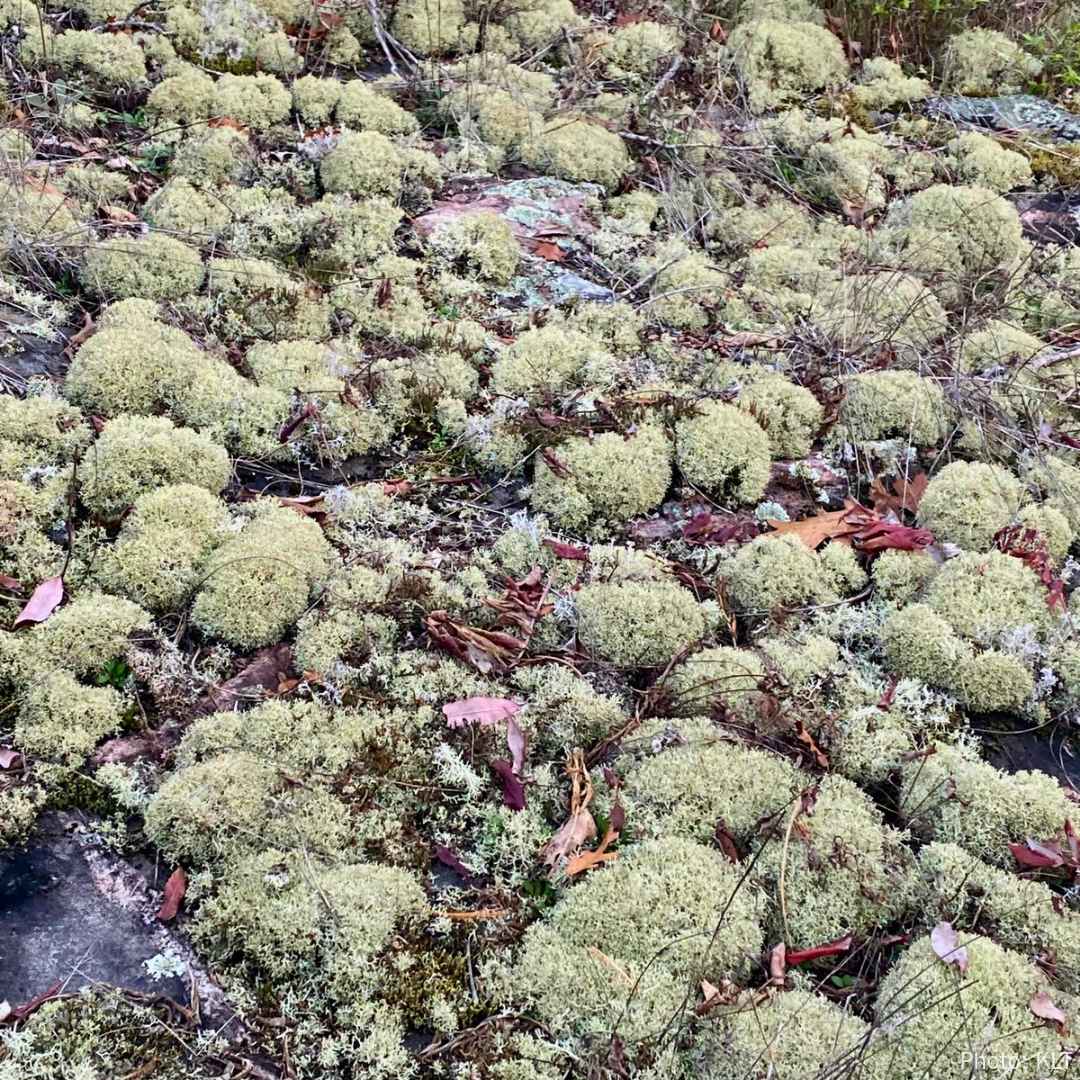
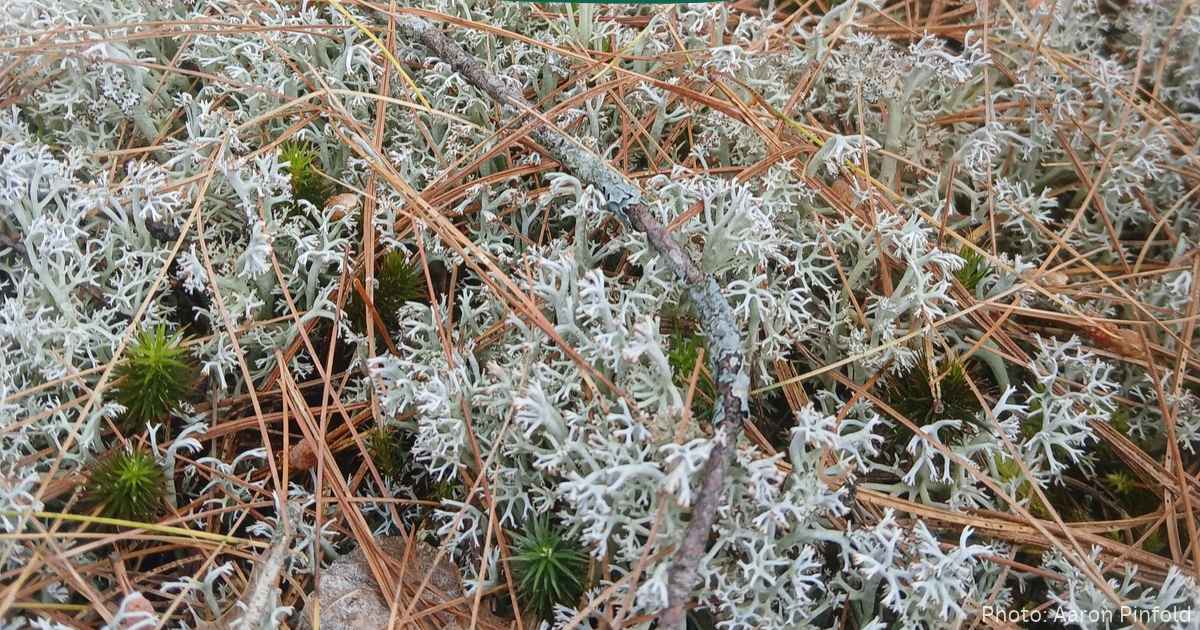
Photo: Reindeer Lichen at KLT’s Kawartha Highlands South property. (Aaron Pinfold)
By Morgan McColl, Communications Assistant
Lichens are among the most overlooked yet ecologically important organisms found throughout the Kawarthas and across Ontario’s forests.
Despite often being mistaken for mosses or simple plant growths on rocks and trees, lichens are neither plants nor fungi alone. Instead, they are a symbiotic partnership between multiple organisms working together.
At the core of each lichen is a fungus paired with a photosynthetic partner, usually algae, but sometimes a cyanobacteria. The fungus provides structure, protection and access to moisture, while the algae (or cyanobacteria) provides sugars made through photosynthesis to feed the organism. There are often many different bacteria found within the organism that may have a role to play in the symbiotic partnership.
Because lichens do not have roots like plants, they absorb nutrients and water directly from the surrounding air and precipitation. This allows them to survive in places where many plants struggle, such as exposed rock faces, tree bark, sandy soils, and even arctic tundra.
The Three Main Forms of Lichen
Lichens appear in a wide variety of colours and textures, ranging from pale greens and greys to bright oranges, yellows, blues, and reds. Although there are thousands of species, most lichens fall into three primary growth forms: fruticose, foliose, and crustose.
Fruticose Lichens
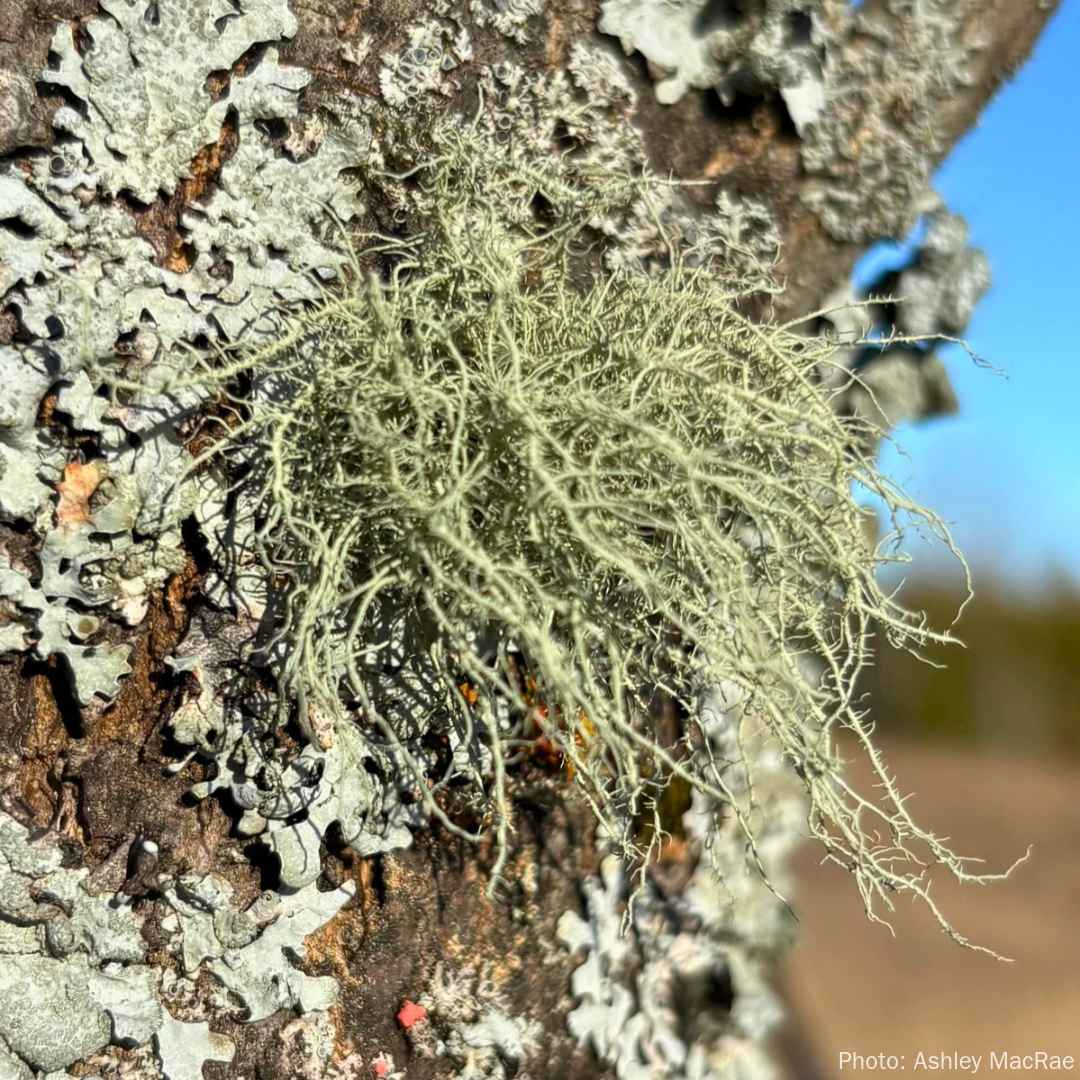
Branching and three-dimensional, often resembling miniature shrubs, antlers, or tiny hanging forests. Species such as Beard Lichens can drape from tree branches and are particularly sensitive to air pollution.
These lichens can grow upright from the ground or hang from trees, creating important microhabitats for insects and nesting materials for birds. In northern ecosystems, some fruticose lichens also serve as a critical winter food source for Caribou in their ranges.
Foliose Lichens
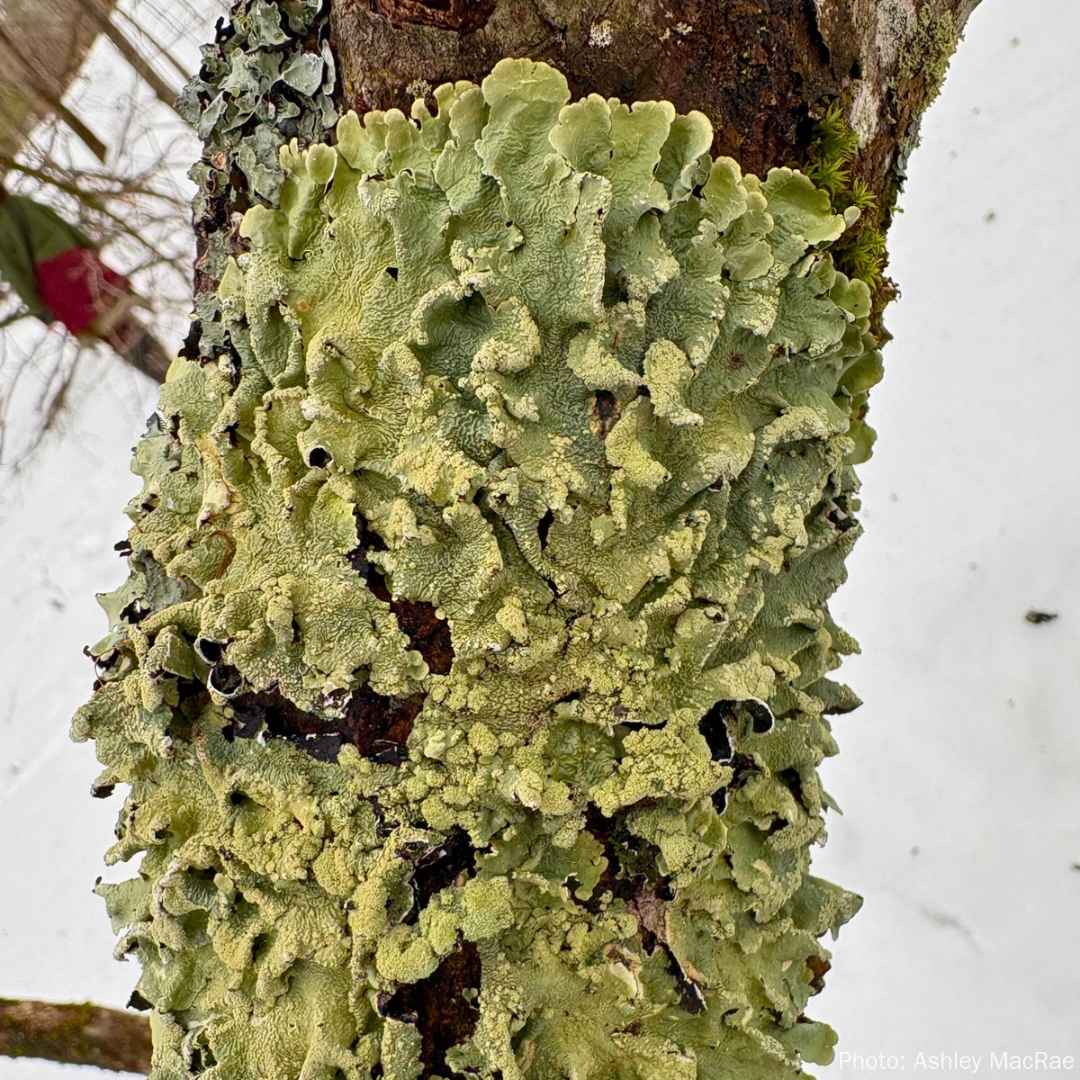
Leaf-like in appearance, with layered lobes that lift slightly away from the surface they grow on. They are commonly found attached to bark, logs, and rocks in humid forests. Their loosely attached structure allows greater airflow and moisture exchange, making them especially abundant in healthy forest ecosystems with stable humidity levels.
Crustose Lichens
Form thin crust like patches that appear to be “painted” onto rocks or bark. Unlike foliose and fruticose lichens, crustose species are tightly bonded to the surface beneath them and cannot be removed without damaging the lichen itself.
These lichens are often the first organisms to colonize bare rock surfaces. Over long periods of time, they contribute to soil formation by slowly breaking down rock through chemical and physical weathering.
Lichens as Bio-Indicators
One of the most important ecological roles lichens play is their use as bio-indicators of environmental health. Since lichens absorb water and nutrients directly from the atmosphere rather than through roots, they also absorb airborne pollutants such as mercury, nickel, sulphur and other heavy metals.
Unlike many plants, lichen have limited ability to filter or expel these contaminants. This means pollutants accumulate in their tissues over time, making them highly sensitive indicators of changing air quality. Some species are particularly sensitive to certain pollutants, meaning if the levels of these pollutants is high in an area, those lichen species will die out.
Areas with high lichen diversity and abundance are often associated with cleaner air and healthier ecosystems. Conversely, declines in sensitive lichen species can indicate increasing pollution or environmental stress.
Scientists around the world use lichens to monitor ecosystem health, urban pollution, forest recovery and even climate change impacts.
Lichens in the Kawarthas
Lichen can be found throughout the Kawarthas on tree bark, exposed bedrock, decaying logs, fence posts, soil, and in wetlands. Some species thrive in rocky barrens, while others prefer shaded forests with consistent moisture. Their slow growth and sensitivity to environmental change make them deeply important components of local ecosystems.
Here are some species of lichen you can find the in the Kawarthas.
Beard Lichen
A fruticose lichen that grow from tree branches in long, pale green strands. Very sensitive to air pollution and is often found in mature forests.
Reindeer Lichen
A branching, shrubby fruticose lichen commonly found on dry soil, rocky barrens, and open pine forests. Important winter forage for Caribou in northern regions.
Sunburst Lichen
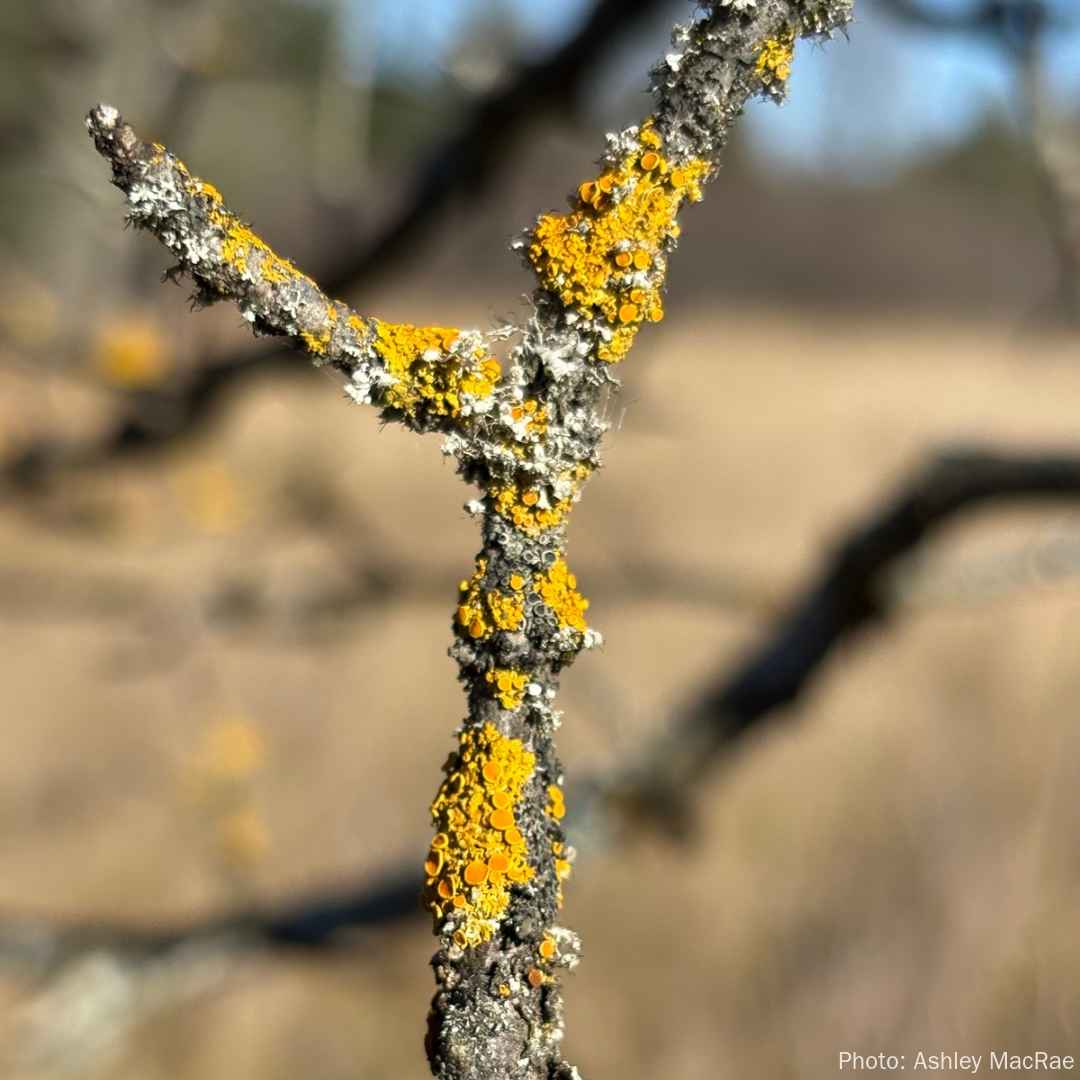
A bright orange crustose lichen frequently seen on rocks, bark, and exposed surfaces where there is lots of sunlight.
Greenshield Lichen
A common foliose lichen with leafy green lobes, often found on tree bark and rocks in forests and urban areas alike.
Dog Lichen
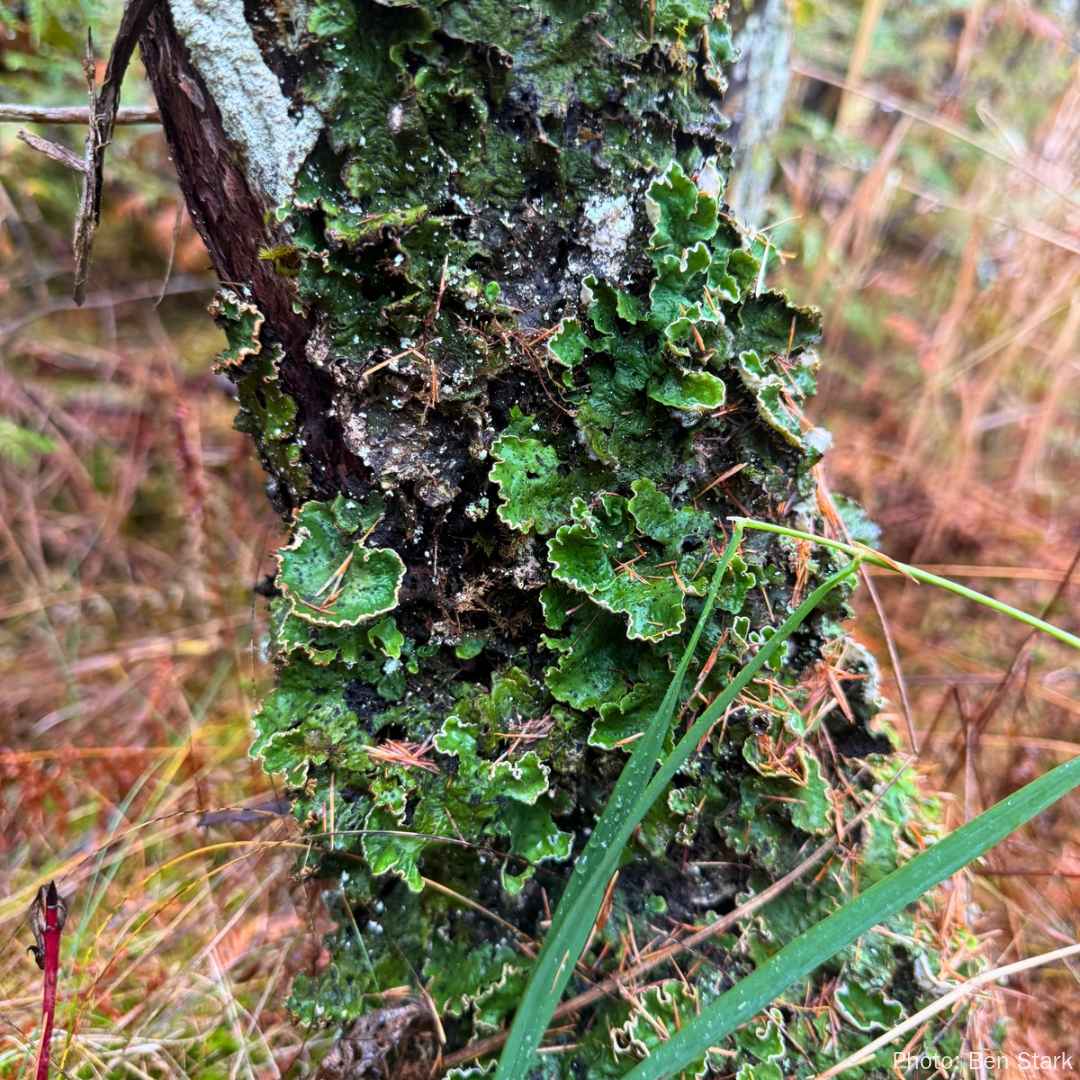
A larger foliose lichen often found on soil, moss, and decaying wood in moist forests.
Boreal Oakmoss
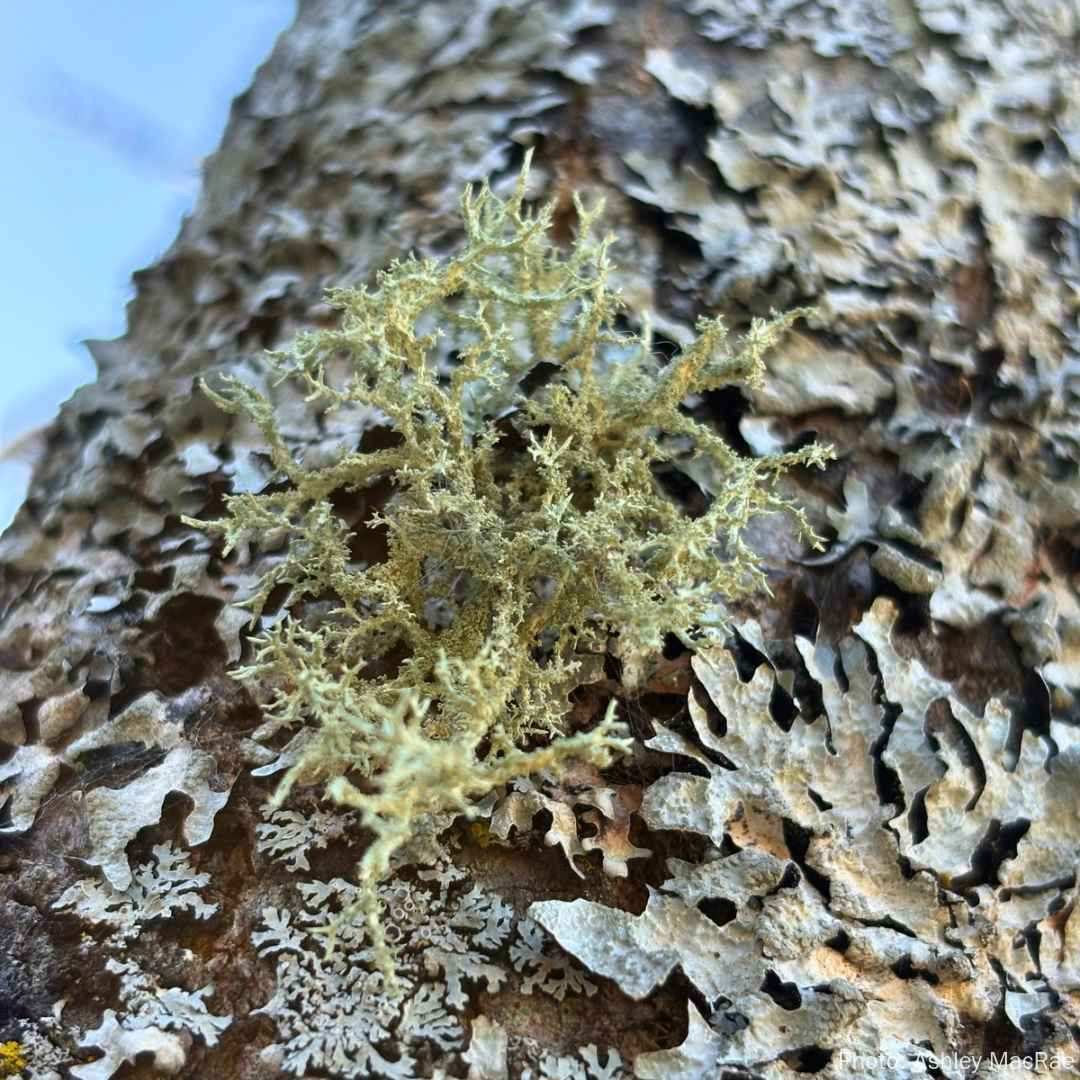
A soft, branching fruticose lichen commonly found in coniferous forests. Despite the name, this lichen needs either deciduous or coniferous trees as substrate.
So the next time you’re exploring nature in the Kawarthas, make sure to look down to enjoy the delicate beauty of the lichens of the Kawarthas.