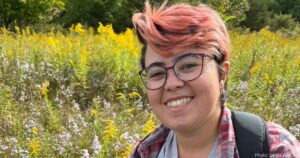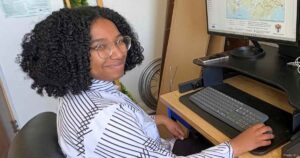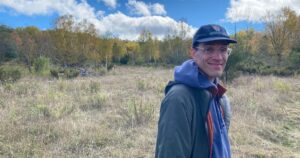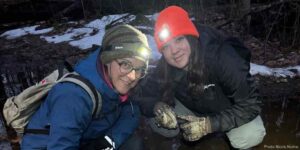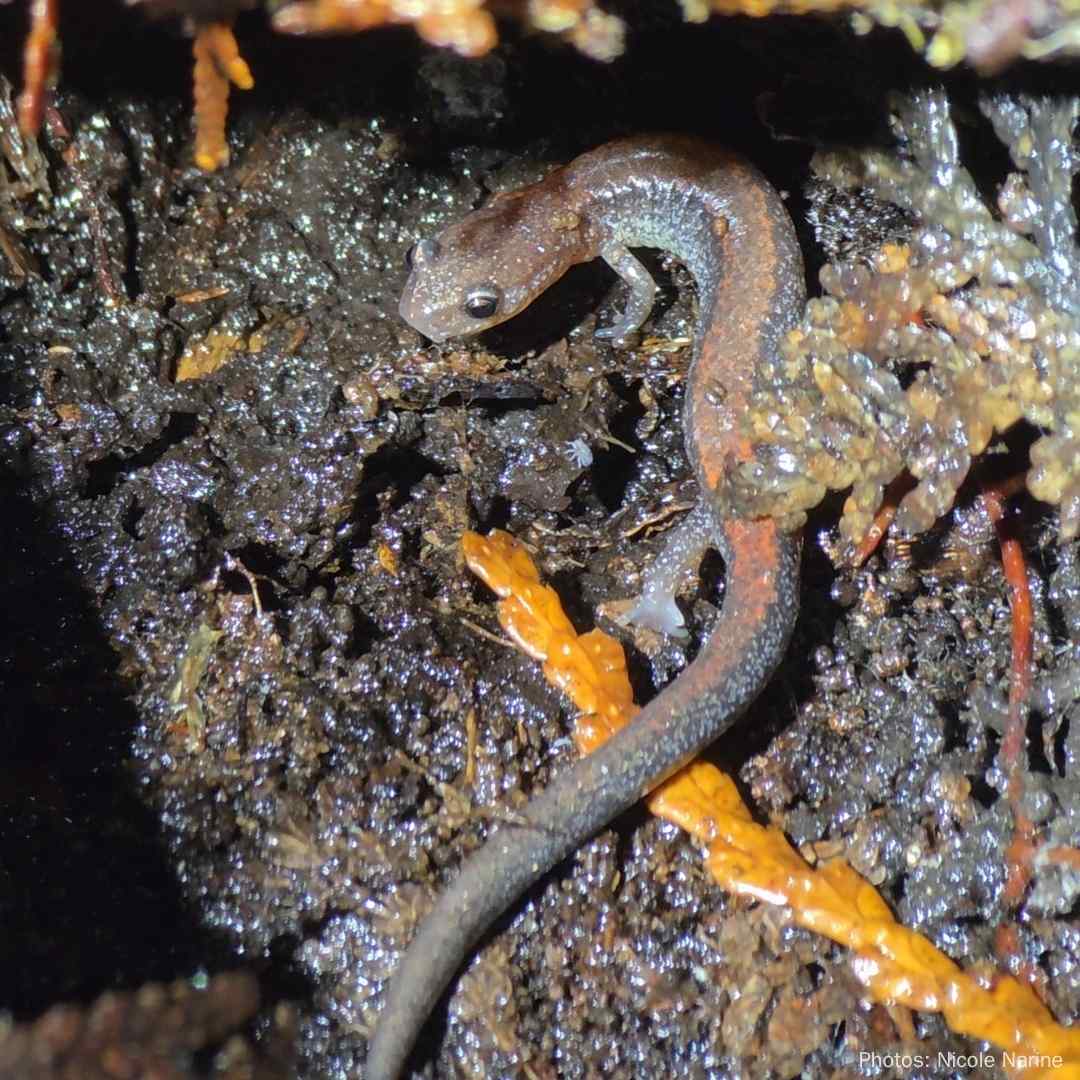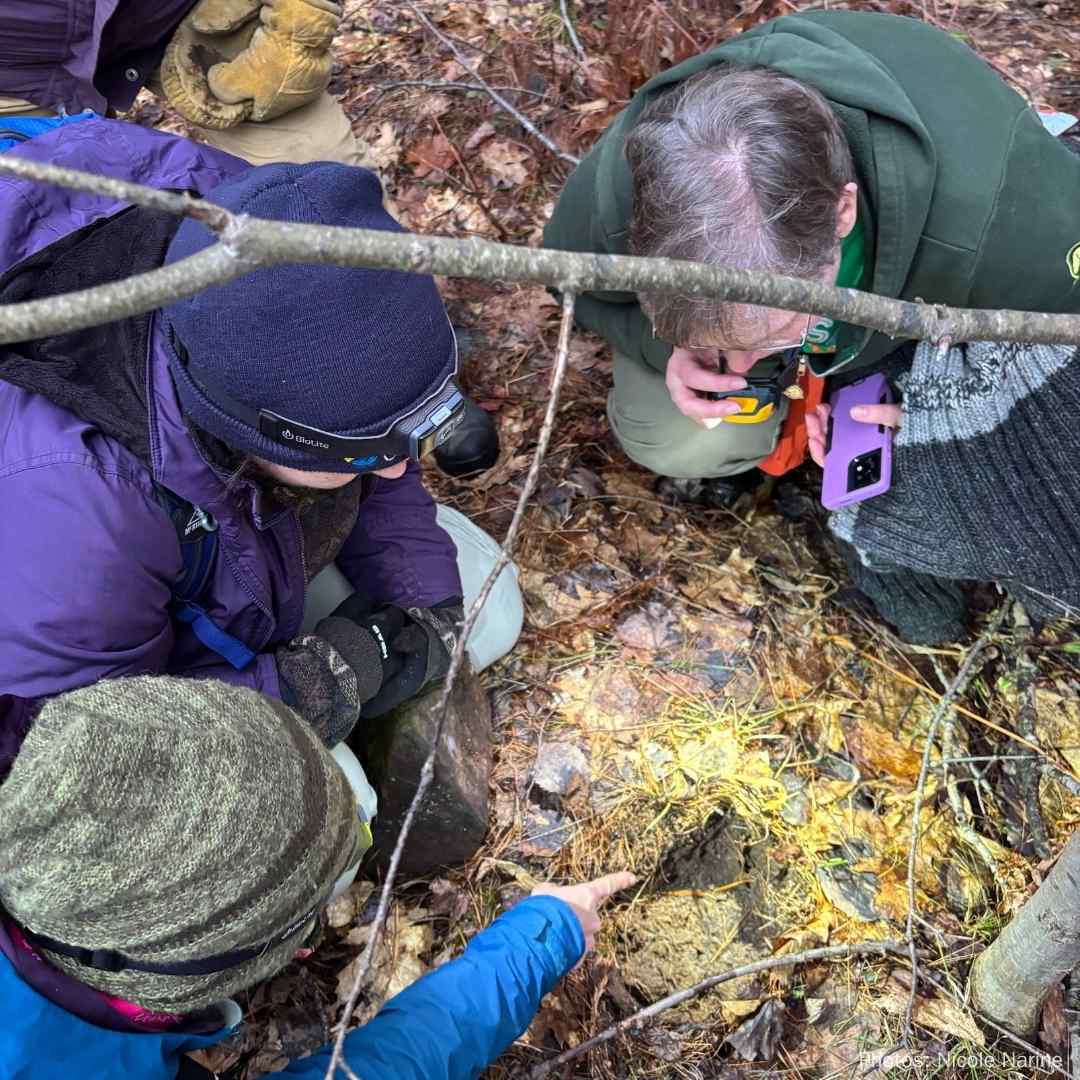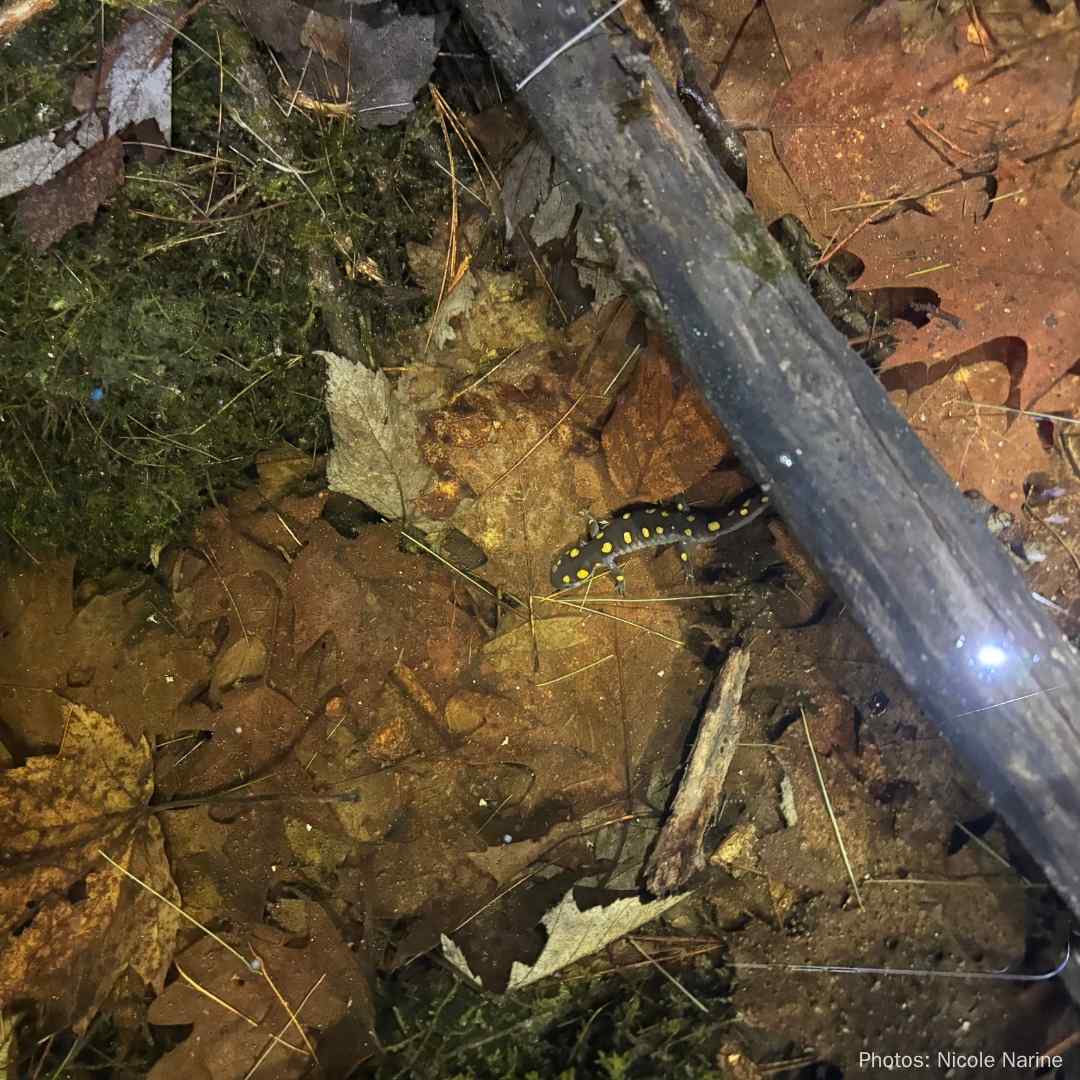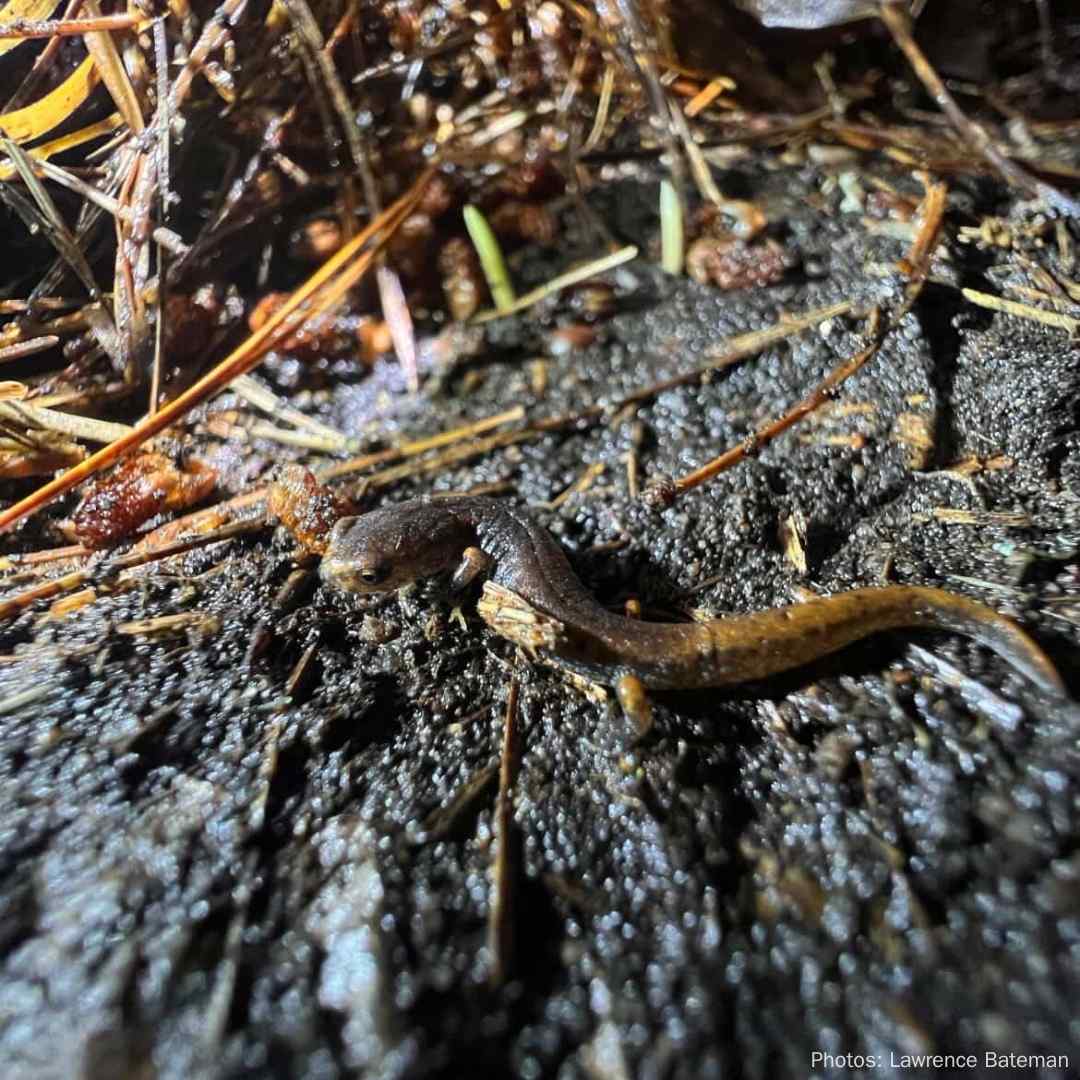
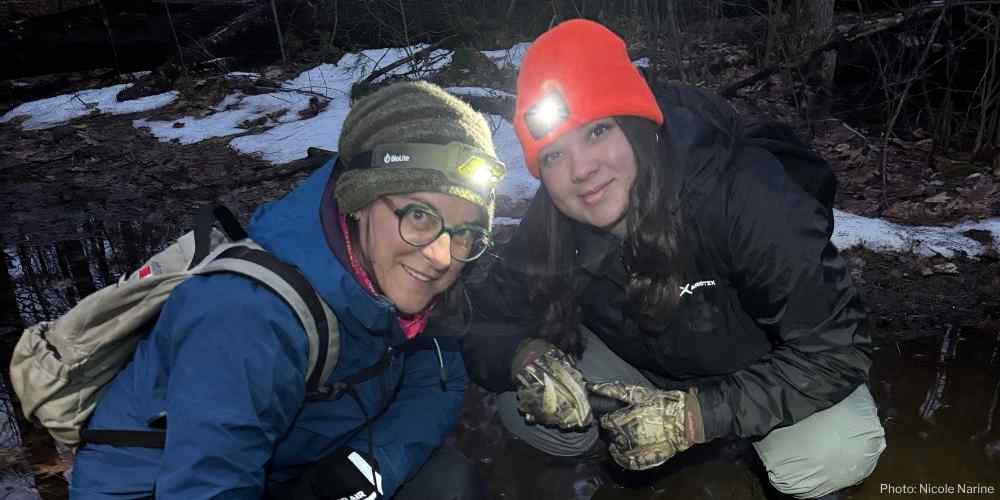
Photo: KLT Trustee Erin McGauley and intern Nicole Narine surveying for salamanders. (Nicole Narine)
KLT staff, volunteers, and interns from Fleming College conduct fourth annual salamander surveys in the Kawarthas to shine a light on amphibian and ecosystem health in the Kawarthas.
This April, we were pleased to welcome Lawrence Bateman and Nicole Narine, students from Fleming College’s Ecosystem Management Technician program, to complete an internship with Kawartha Land Trust (KLT). These dedicated and knowledgeable students supported the delivery of our annual Salamander Survey project, now in its fourth year.
This project collects important information about presence and abundance of amphibians — specifically salamanders, but also early-singing frogs, like the at-risk Western Chorus Frog — on privately-owned properties throughout Peterborough County and City of Kawartha Lakes to contribute to citizen science records, identify local amphibian breeding habitat, and help landowners to learn more about the ecology of their land.
The data will be uploaded to iNaturalist, where it can be used by other agencies and experts for scientific research and population monitoring.
We extend our gratitude to members of KLT’s Partners in Conservation program who welcomed the “Sallie Squad” volunteer teams to survey their properties and collect data about these fascinating creatures.
To learn more about this year’s surveys, you can read Nicole and Lawrence’s report below.
Nicole Narine & Lawrence Bateman, Ecosystem Management Technician students from Fleming College’s School of Environmental & Natural Resource Sciences
For the fourth year, Kawartha Land Trust (KLT) conducted their annual Salamander Surveys as part of their ongoing efforts to monitor salamanders at sites across Kawartha Lakes and Peterborough County.
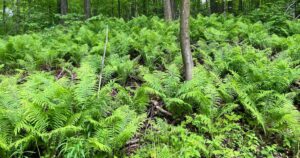
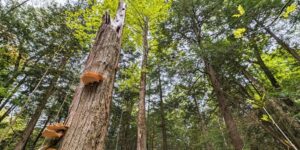
The surveys took place on properties owned by KLT Partners in Conservation members — typically lands that include diverse ecosystems featuring preferential habitat for salamanders like mixed-deciduous forests complete with vernal pools.
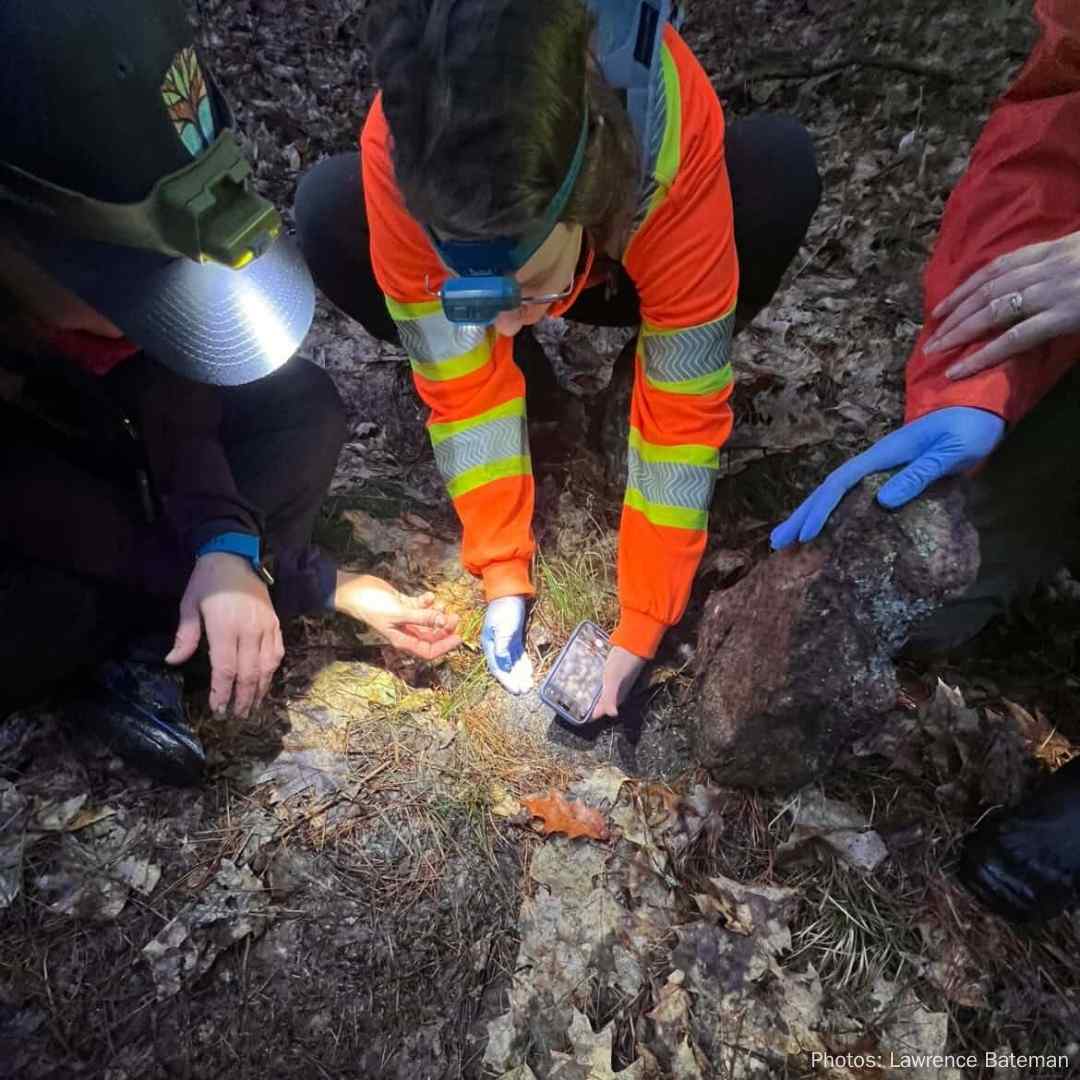
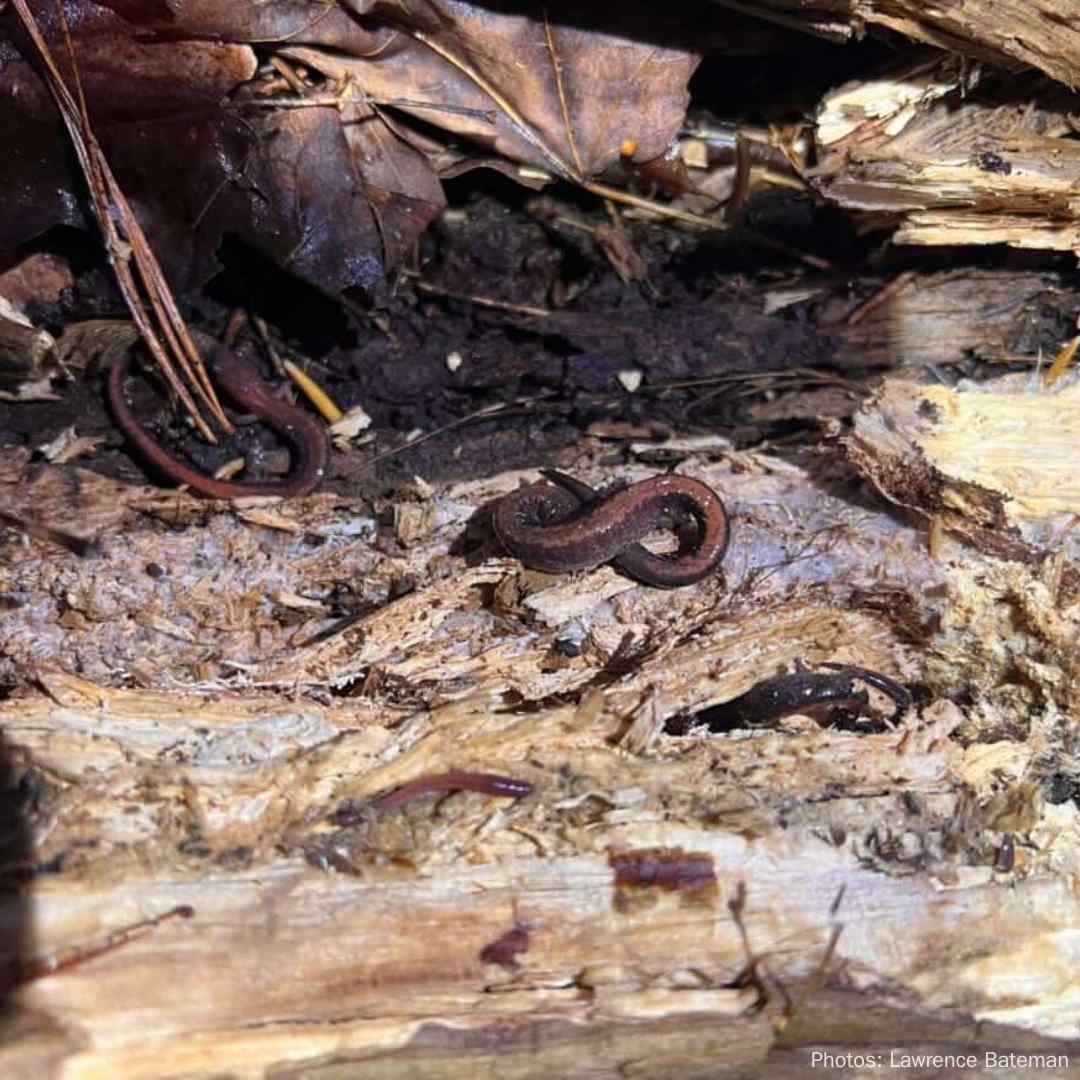
Salamanders tend to prefer damp, shaded habitats, within proximity to shallow bodies of water. There, they burrow underneath decaying logs, fallen woodpiles, rocks, and underneath dense leaf litter. Sometimes, they can even be spotted swimming in the water or resting on top of natural debris.
With guidance from Rachel Barrington, KLT’s Partners in Conservation Program Coordinator, and using the protocol crafted by Trent University student Jordan McDonald, we led a team of experienced KLT staff and volunteers to conduct the salamander surveys. We were also lucky enough to have some of the landowners join us on the surveys, making our treks through kilometers of forest much easier to navigate!
Sites visited this year were located near Norwood, Douro, Nestleton Station, Keene, Havelock, Lakehurst, Lakefield, Bobcaygeon, and Pontypool. Across the ten sites that we surveyed, we were able to locate salamanders at half, some with many more than others at locations where they were present! We’ve come to note that “no data is still data,” and the lack of salamanders in certain locations can lead us to important questions about why we may not have found any.
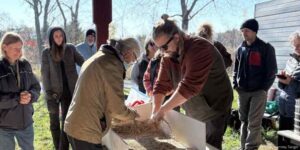
While conducting the surveys, we gave demonstrations on how to safely look for salamanders. These small amphibians are not expecting us, so it’s important to handle the places they might be found and them with the utmost care.
The focus of the surveys was to search for Four-toed, Spotted, Blue-spotted, and Eastern Red-backed salamanders. Lucky for everyone involved, their names also act as identification tips, so they aren’t too tricky to identify once located.
We found it fun to be able to incorporate technology into citizen science and outdoor field work by inputting our data and photos into the ArcGIS Field Maps app. Needless to say, we quickly realized we’re not professional photographers, but we did our best and this valuable data will end up being uploaded to iNaturalist, where it can help inform scientists and other projects.
We are both grateful to have had the opportunity to lead the 2026 surveys and conclude our time at Fleming College through our field placements with Kawartha Land Trust. It was a fantastic experience that helped us foster a more concrete understanding of ecosystem health and biodiversity across the Kawarthas.
Having landowners and volunteers involved also helps to spread awareness of the importance of these sensitive amphibians as well. Getting out into your own backyard and taking the time to learn about what wildlife may be hiding back there is not only fun but also crucial to understanding what is found in healthy ecosystems.
With the conclusion of the fourth Salamander Survey project, we’d like to acknowledge Rachel Barrington for organizing, leading, and conducting this year’s project. She is very knowledgeable and passionate about this project and it continues to grow and amass more data.
With all of the hard work and dedication that has gone into this project so far, we are excited to see the project continue and provide results that help us better understand the salamanders that call the Kawarthas home.
KLT offers it thanks to Nicole and Lawrence and all of the volunteers who participated in this year’s surveys. Thank you for contributing to citizen science right here in the Kawarthas.