Hayden Wilson, Land Stewardship Coordinator
Thanks to community, donor, and volunteer support, Kawartha Land Trust (KLT) actively manages six invasive plant species and monitors for three invasive insect species (Emerald Ash Borer, Spongy Moth, and Hemlock Wooly Adelgid) across our protected properties.
Each plant species poses a different challenge for KLT’s stewardship team depending on the species’ pervasiveness across the landscape, its lifecycle, and the rate of spread and threats posed to local ecosystems.
Integrated pest management strategies are paired with best management practices to help tackle invasive species that affect biodiversity in the Kawarthas. With your support, we’re able to support more robust and resilient ecosystems in the Kawarthas.
Learn more about the invasive plant species that KLT monitors and manages on our nature reserves:
Dog-strangling Vine is an invasive species that grows in thick stands and chokes out other plants — even trees. It also makes travelling through the woods difficult for larger animals. KLT manages Dog-strangling Vine at Ballyduff Trails in order to maintain the tallgrass prairie and forest understory and at Christie Bentham Wetland.
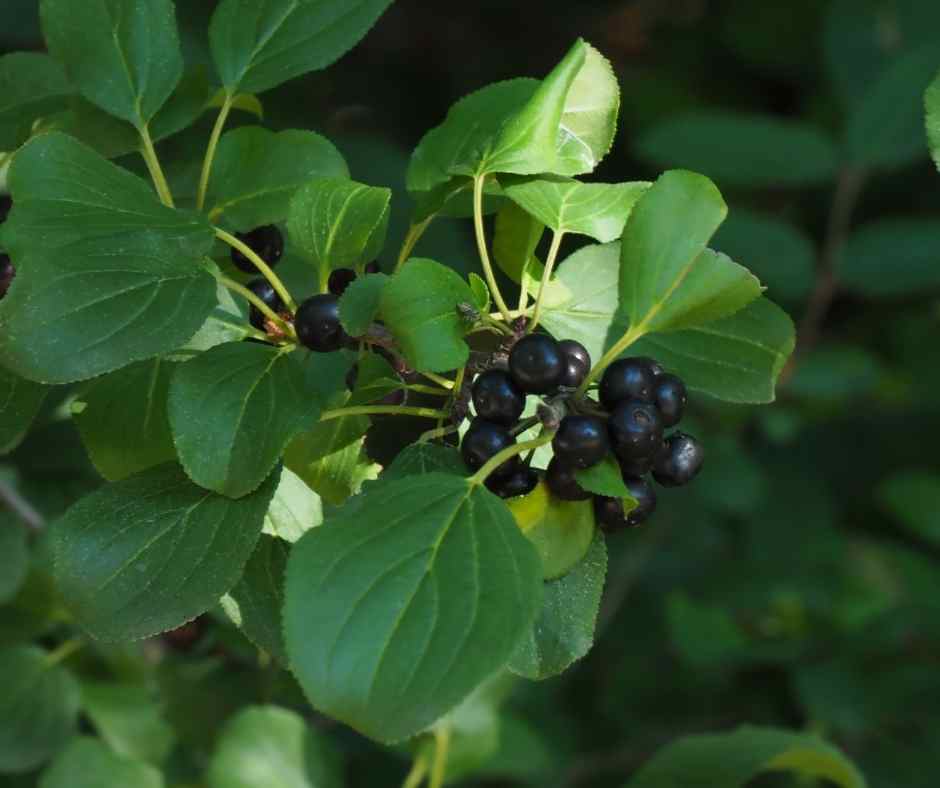
European Buckthorn is a prickly tree that tends to dominate the understory and open fields. KLT manages this tree at a number of our protected properties to keep open fields and hedgerows from becoming overgrown.
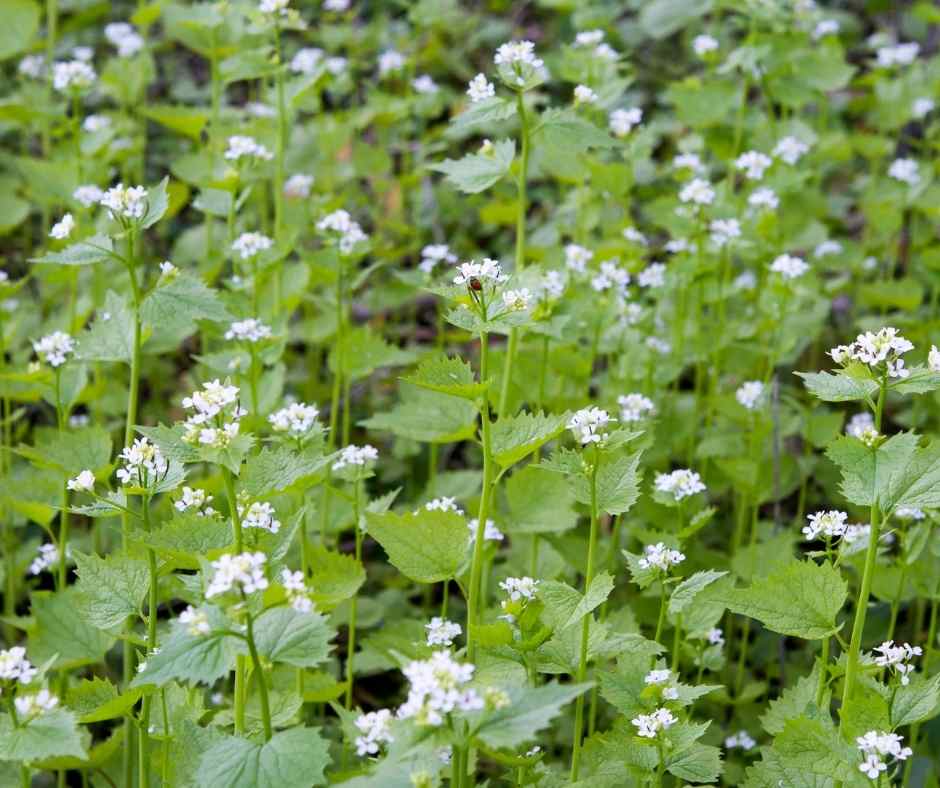
Garlic Mustard is a surprisingly tasty invasive species that was originally brought to Canada as a crop. It grows in dense clusters in forests, forming a thick mat of roots that keeps other native plants from pushing through. KLT manages Garlic Mustard at several KLT properties.
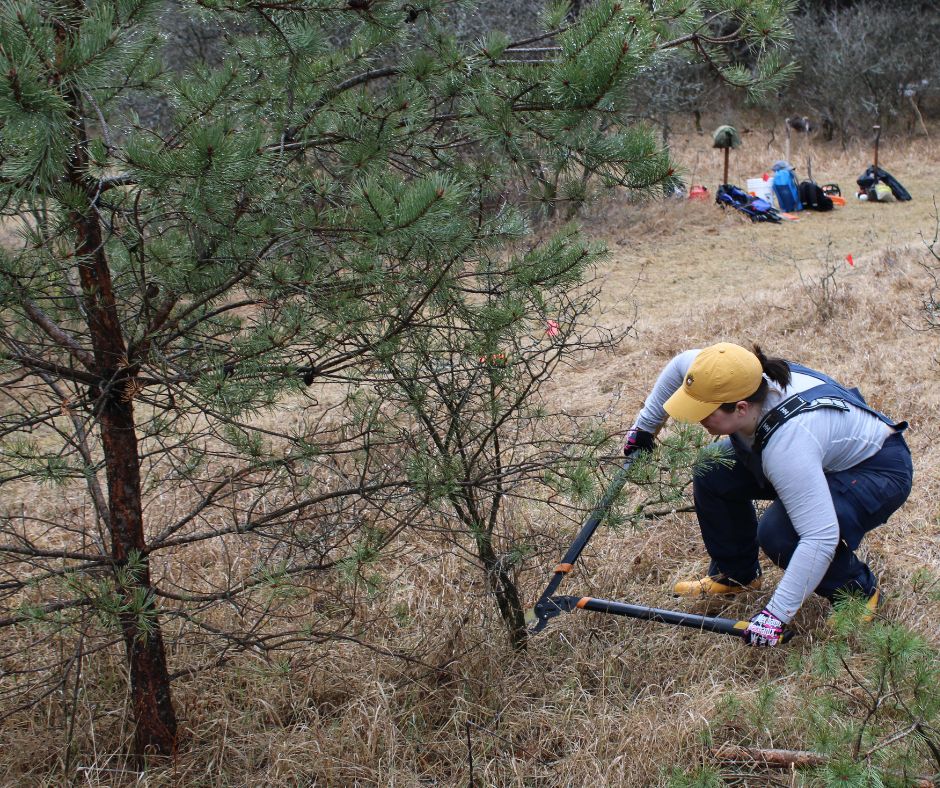
Scots Pine is a fast-growing species of pine that was originally brought to Canada for timber production, but due to poor seed genetics most stands grow abnormally and are not useful for timber production. KLT manages Scots Pine at Ballyduff Trails and Cation Wildlife Preserve to help restore native forests and maintain open meadows.
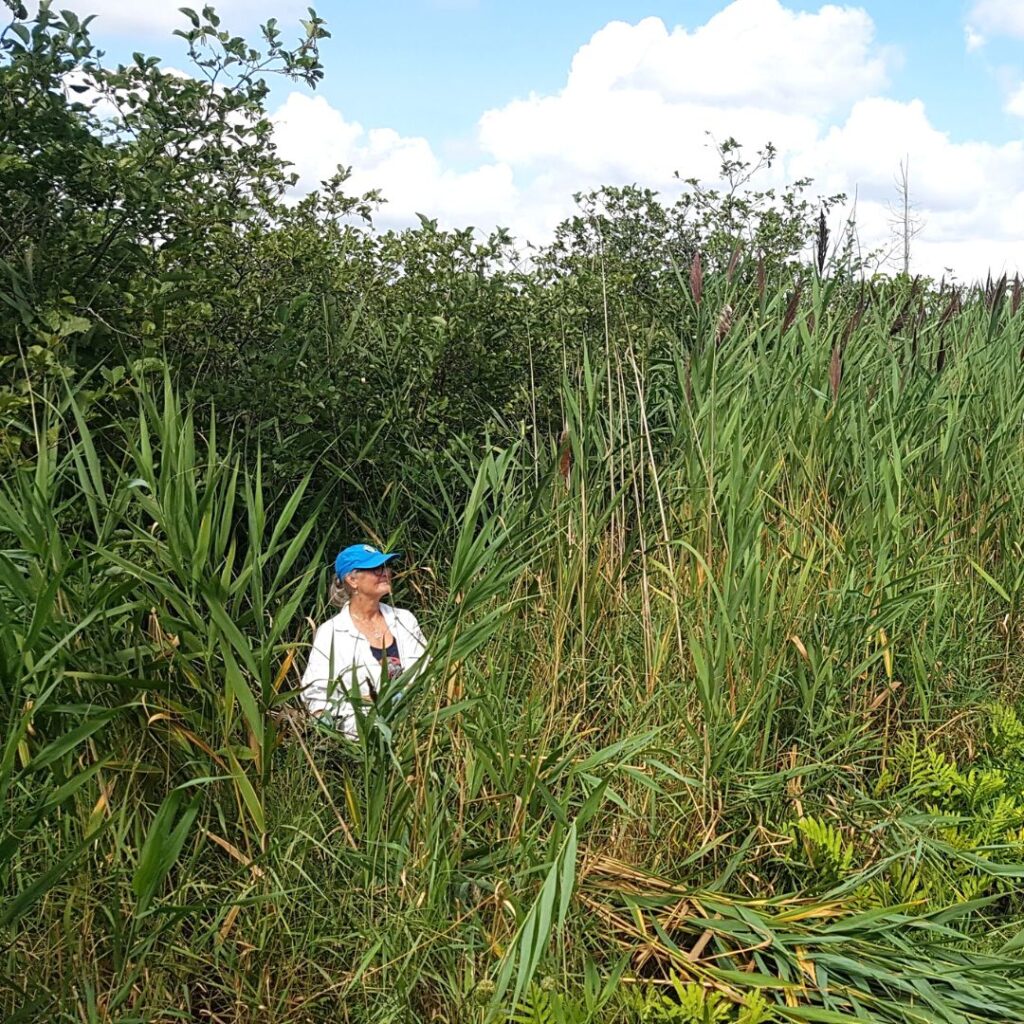
Invasive Phragmites is one of the most aggressive and fastest-spreading invasive species in Ontario. Its thick root systems prevent any other species from growing and its tall stalks shade out anything that tries — even shrubs. KLT manages invasive Phragmites at ten of our protected properties.
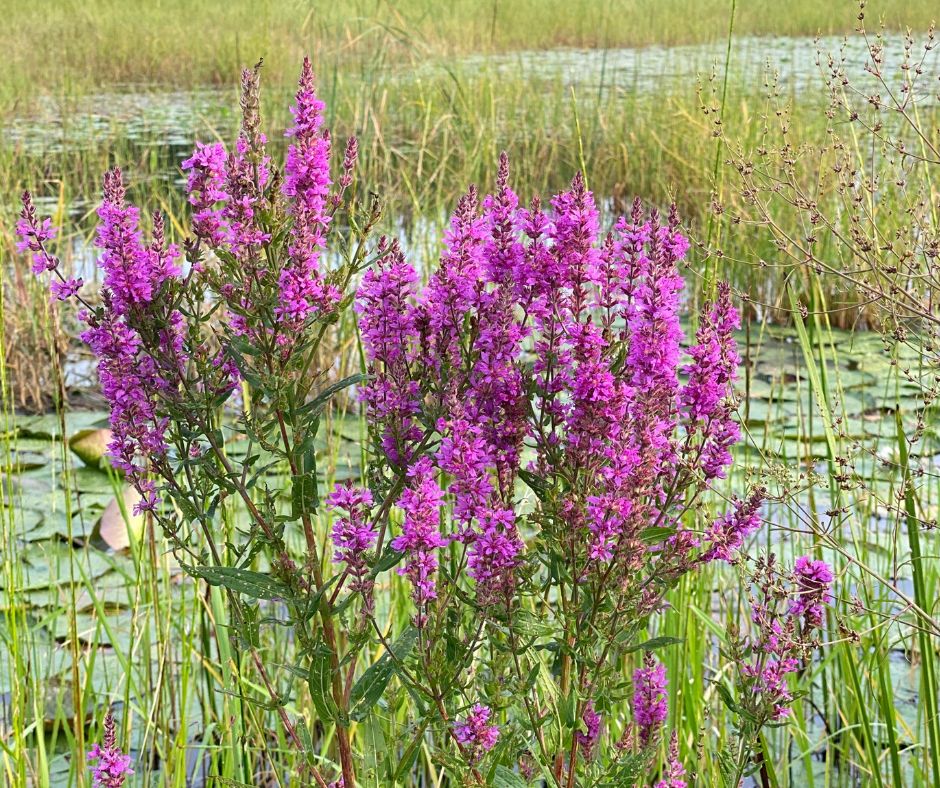
Purple Loosestrife is a former worst-case scenario invasive species that has declined thanks to the success of the introduction of the Loosestrife Beetle, which eats the plant. KLT still monitors for this invasive species.

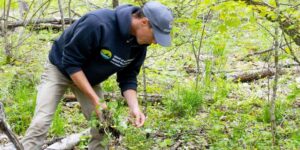
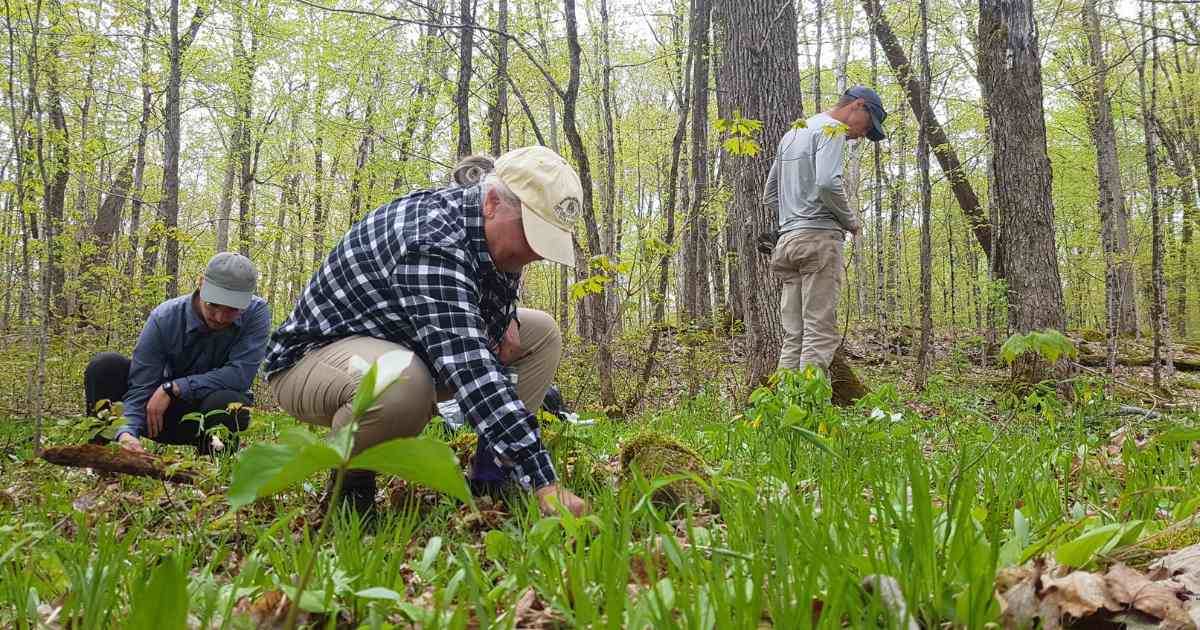
Main photo: KLT volunteers removing Garlic Mustard from a KLT-protected forest (Angelina Gordon). Article updated on February 24, 2026, to reflect new numbers and information.